
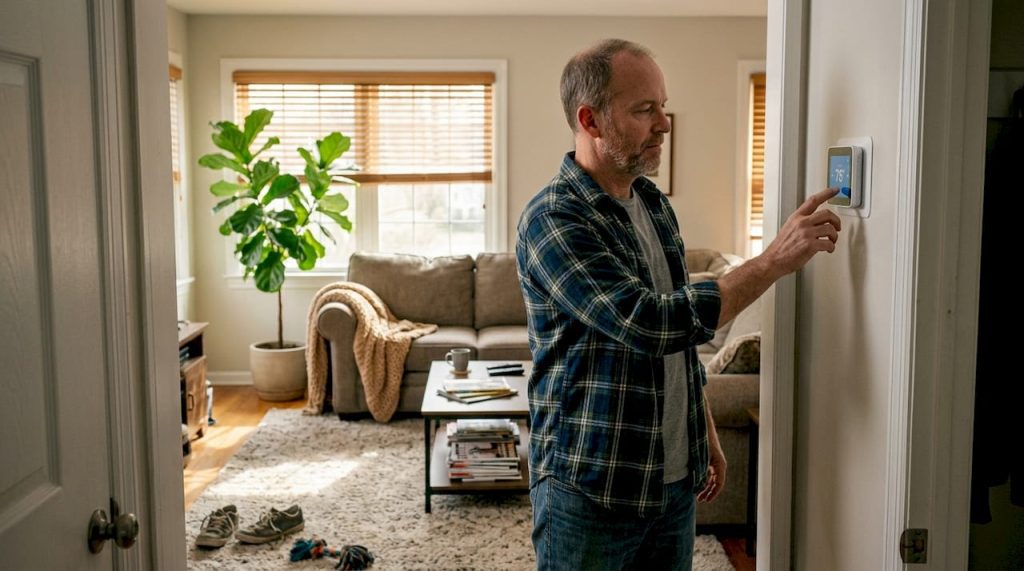
One room in your Newark home feels like a sauna while another stays freezing no matter what you set the thermostat to. Sound familiar? This is one of the most common complaints we hear from homeowners, and the fix isn’t buying a new system or cranking up the heat. Most people have never heard of HVAC zoning, but it’s the reason some homes stay perfectly comfortable on every floor, in every room, all year long. This guide breaks down exactly how zoning works, what it costs you in efficiency without it, and how Newark, DE homeowners can put it to work.
Table of Contents
- Understanding HVAC zoning: The basics
- How HVAC zoning works in your home
- Top benefits of HVAC zoning: Comfort, savings, and control
- Is HVAC zoning right for your home?
- A local expert’s perspective: What most homeowners miss about HVAC zoning
- Upgrade comfort with local HVAC zoning solutions
- Frequently asked questions
Key Takeaways
| Point | Details |
|---|---|
| Zoning boosts home comfort | HVAC zoning ensures every room gets the temperature control it needs with individual zones and thermostats. |
| Lower energy costs | By only conditioning the spaces you use, zoning can cut heating and cooling bills by up to 30 percent. |
| Best for larger homes | Zoning is especially beneficial in homes with multiple stories or additions, but not every home needs it. |
| Professional installation matters | A properly designed zoning system requires expert layout and installation for the best results. |
Understanding HVAC zoning: The basics
Most homes run on a single thermostat that controls the entire house as one big space. Your system doesn’t know whether the upstairs bedrooms are empty at noon or whether your sun-drenched living room is ten degrees warmer than the basement. It just heats or cools the whole house to one target temperature, regardless of where comfort is actually needed.
HVAC zoning changes that completely. As explained in how HVAC systems work, HVAC zoning lets you control temperature independently in different areas of your home. Each zone has its own thermostat and gets its own temperature setting, which means your upstairs bedrooms can be cool and quiet at night while your main floor stays warmer during the day.
The system relies on three core components working together:
- Dampers: Motorized flaps installed inside your ductwork that open or close to direct airflow toward or away from a specific zone.
- Zone thermostats: Individual thermostats placed in each zone that send signals based on that area’s temperature needs.
- Zone control panel: The brain of the operation. It receives signals from all thermostats and tells each damper what to do.
Here’s a quick look at how zoned and traditional systems compare:
| Feature | Traditional system | Zoned system |
|---|---|---|
| Thermostats | One for whole home | One per zone |
| Temperature control | Uniform everywhere | Customized per area |
| Energy use | Heats/cools all spaces | Targets occupied areas |
| Upfront cost | Lower | Higher |
| Monthly savings | Standard | Up to 30% lower bills |
The upfront investment is real, but the payoff in comfort and efficiency often makes zoning one of the smartest upgrades a homeowner can make.
Pro Tip: Pairing your zoning system with programmable thermostat basics gives you even more control. Smart thermostats let you schedule different temperatures for each zone throughout the day without touching a thing.
How HVAC zoning works in your home
With the basics covered, let’s examine what happens behind the scenes when your home uses zoning.
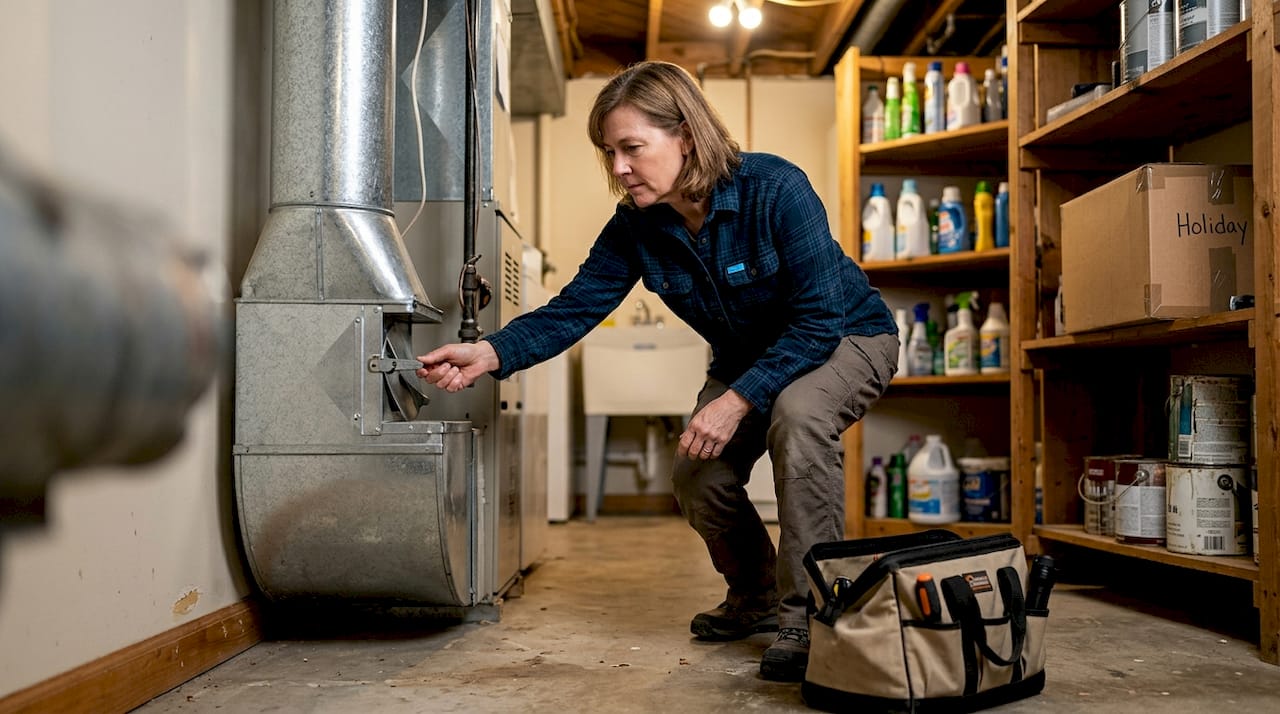
Imagine it’s a July afternoon in Newark. Your upstairs is baking from direct sun exposure, but your basement feels perfectly fine. In a traditional home, your single thermostat reads a moderate temperature and never sends the signal your upstairs needs relief. With zoning, the upstairs thermostat registers the heat and calls for cooling independently.
Here’s the step-by-step process:
- Zone thermostat calls for conditioning: Your upstairs thermostat detects it’s too warm and sends a signal to the zone control panel.
- Control panel activates the system: The panel tells your HVAC unit to run and opens the damper serving the upstairs zone.
- Other zone dampers stay closed: Zones that don’t need cooling keep their dampers shut, so conditioned air flows only where it’s needed.
- Temperature is reached: Once the upstairs hits the target, the thermostat signals the panel to close that zone’s damper and shut down the system if no other zones are calling.
As noted by HVAC professionals, zoning uses dampers in ductwork to control airflow to different areas, making the whole process efficient and precise.
| Scenario | Single-zone home | Zoned home |
|---|---|---|
| Hot upstairs, cool downstairs | Whole house cools to one temp | Only upstairs cools |
| Empty rooms during work hours | Full home heated/cooled | Unoccupied zones off |
| Night comfort in bedrooms | Whole house adjusted | Bedrooms only conditioned |
Your thermostat settings for your home matter more with zoning because each zone thermostat should reflect how that space is actually used, not just a default house-wide number.
According to central air conditioning guidance from the Department of Energy, proper airflow management through systems like dampers is key to maximizing efficiency in residential cooling setups.
Pro Tip: Place thermostats in the rooms where temperature swings are most dramatic, like south-facing rooms or spaces above a garage. These spots need the most responsive control.
Top benefits of HVAC zoning: Comfort, savings, and control
Now that you understand how zoning works, let’s look at the real benefits for you and your home.
Lower utility bills. This is the one that gets everyone’s attention. Heating and cooling costs can drop by up to 30% with a properly designed zoning system. When you stop conditioning empty rooms and wasted spaces, those savings add up fast on your monthly bill.
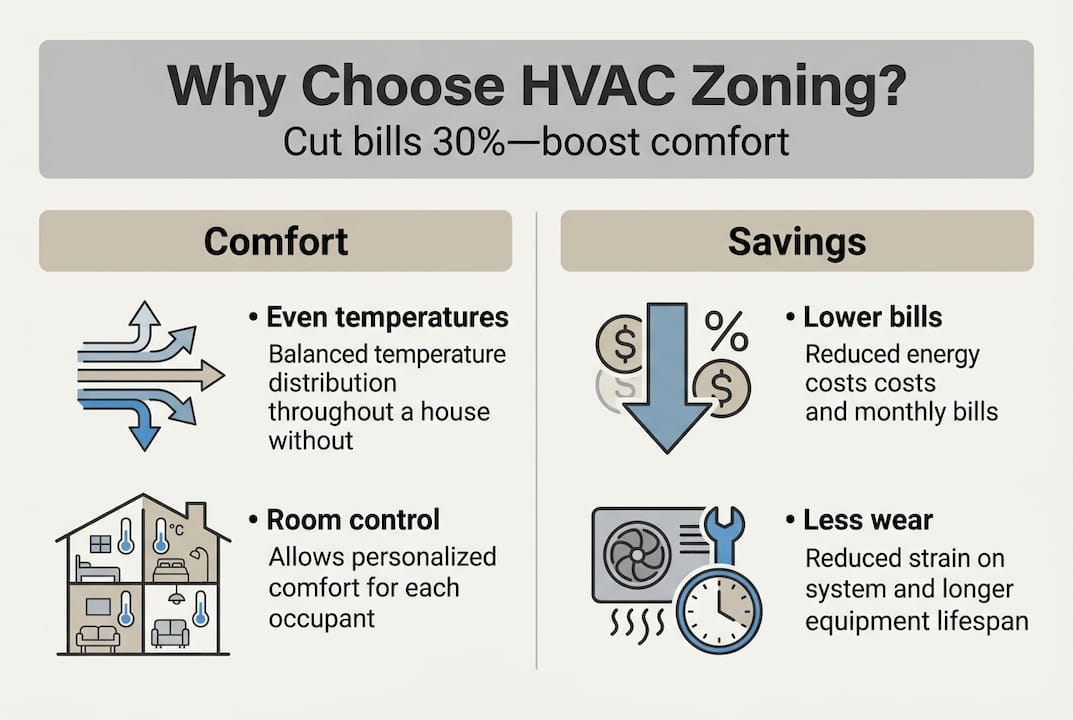
Custom comfort for every family member. One person runs warm, another always feels cold. Zoning lets each household member control the temperature in their own space without a battle over the thermostat. Bedrooms can be cooler for sleeping while common areas stay warmer in the morning.
Key benefits at a glance:
- Reduced energy waste from heating or cooling unoccupied rooms
- Targeted nighttime comfort in bedrooms without overcooling common areas
- Better temperature management in sun-exposed upstairs rooms
- Reduced system wear because your HVAC runs shorter, more efficient cycles
- Potential allergy relief by directing filtered air to specific rooms
“Targeted heating and cooling is one of the most effective strategies homeowners can use to reduce energy waste. When you condition only the spaces you actually use, efficiency improves dramatically.” — Energy efficiency specialist
For Newark homeowners, this matters even more given Delaware’s humid summers and cold winters. Running your system at full blast throughout the entire house every season isn’t just expensive, it puts unnecessary stress on equipment and shortens its lifespan.
Exploring energy-saving HVAC methods alongside zoning can push those savings even further, especially when you combine zone control with smart scheduling and proper insulation.
Reduced system wear is often overlooked. When your HVAC runs in targeted, efficient cycles instead of long whole-home blasts, components last longer. That means fewer repairs and a longer-lived system overall.
Is HVAC zoning right for your home?
Not every household needs zoning, so let’s help you decide if it’s a smart upgrade for your situation.
Zoning delivers the biggest returns in homes where temperature inconsistency is already noticeable. As best HVAC installation location guidance confirms, homes with multiple floors or large open spaces especially benefit from zoning because heat rises and different exposures create uneven conditions naturally.
Homes that gain the most from HVAC zoning:
- Multi-story homes where heat rises and creates dramatic differences between floors
- Homes with additions or finished basements that weren’t designed as part of the original ductwork layout
- Properties with large windows or sun-facing rooms that heat up faster than the rest of the house
- Homes with family members on very different schedules where some areas need conditioning and others don’t
- Houses with guest rooms or home offices used only at certain times of day
Signals that your home needs zoning:
- You have one or two rooms that are always the problem, either too hot or too cold
- Your family argues about the thermostat constantly
- Your energy bills seem high for the size of your home
- You’ve added a room or finished a basement and noticed airflow issues
Before investing in zoning, it helps to know if your current ductwork can support it. Poor air sealing throughout the house can undermine the whole system, so fixing those gaps first is smart.
Pro Tip: Before scheduling a zoning installation, ask your contractor to evaluate your existing ductwork and insulation. Knowing questions to ask your HVAC contractor in advance can save you from a costly misstep if your current setup needs upgrades first.
A local expert’s perspective: What most homeowners miss about HVAC zoning
Here’s what years of local HVAC service in Newark have taught us about zoning, and what most homeowners rarely hear before they commit.
Zoning technology is genuinely impressive. But the technology only works as well as the installation behind it. We’ve seen homeowners add zoning to older duct systems that weren’t designed for it, and the result was actually worse efficiency, not better. When you close off zones without adjusting the system’s airflow capacity, pressure builds up and strains the equipment.
The uncomfortable truth is that not every home benefits equally from zoning, and some homes need duct redesigns before zoning makes sense. A two-bedroom ranch with an open floor plan and good insulation may see little payoff. A three-story colonial with sun rooms and a finished basement? Night and day difference.
Our strongest advice: work with someone who understands local building styles and climate patterns. Referencing HVAC installation advice specific to your home layout is worth more than any general guide. Get a proper load calculation done before design decisions are made. The system needs to match your home’s real needs, not just the number of zones you want.
Upgrade comfort with local HVAC zoning solutions
If your Newark home has rooms that never feel right, zoning could be the fix you’ve been looking for. The energy savings, personalized comfort, and reduced system wear all add up to a real return on investment over time.

At Enhanced Heating & Air Conditioning, we help Newark homeowners design and install zoning systems that actually fit their homes. From evaluating your existing setup to full installation and follow-up support, our team brings the local expertise your project needs. Check out our HVAC Newark, DE services to learn what’s possible for your home, or read our HVAC repair cost guide to plan your budget. We offer free consultations and transparent pricing, so you always know what you’re getting before any work starts. Explore professional installation advice and reach out today.
Frequently asked questions
Does HVAC zoning really save money on energy bills?
Yes, zoning can reduce energy bills by up to 30% by only conditioning the zones that are actually occupied, avoiding wasted energy on empty rooms.
Can HVAC zoning be added to my existing system?
Many homes can retrofit zoning, but success depends on your existing ductwork and equipment capacity. A professional assessment will confirm whether your current setup is compatible or needs upgrades first, especially for homes with multiple floors.
How many zones does a typical home need?
Most homes use two to four zones, but your floor plan, the number of separate living areas, and how your family uses each space all determine the right number for your situation.
Is HVAC zoning worth the investment for small homes?
Zoning delivers the biggest benefits in larger or multi-story homes where temperature differences between spaces are most noticeable. Smaller, single-floor homes with consistent airflow may see fewer dramatic savings.
Will HVAC zoning improve air quality?
A well-designed zoning system can improve air quality by directing filtered, conditioned air to specific rooms as needed, which supports better ventilation where it matters most.

Joe Brooks is the owner of Enhanced Heating & Air Conditioning and has more than 23 years of experience serving homeowners and businesses in and around Newark Delaware. Over the past two decades, Joe has built Enhanced Heating & Air Conditioning by helping customers with heating, air conditioning, indoor air quality, HVAC maintenance, and system installation needs. His articles draw on years of hands-on industry experience and the real questions Enhanced customers ask about keeping their homes comfortable, efficient, and reliable. Joe and the Enhanced team serve Newark and communities throughout New Castle County and the surrounding Delaware area.