
Your air conditioner stops cooling on the hottest day of the summer, and suddenly you’re standing in a warm house wondering where to even start. That frustration is something nearly every Newark, DE homeowner has felt. The good news is that many AC problems have simple causes you can check yourself before picking up the phone. This guide walks you through five practical troubleshooting steps, from checking your thermostat to knowing when a professional needs to step in, so you can get your home comfortable again as quickly as possible.
Table of Contents
- Step 1: Check your thermostat and power sources
- Step 2: Inspect and replace your air filter
- Step 3: Examine outdoor and indoor units for obstructions
- Step 4: Diagnose common cooling problems and know when to call for help
- Step 5: Schedule regular maintenance to prevent future issues
- Our take: What most DIY guides miss about AC troubleshooting
- Let the pros help — Expert AC service in Newark, DE
- Frequently asked questions
Key Takeaways
| Point | Details |
|---|---|
| Start with simple checks | Verify thermostat and power settings before moving to advanced troubleshooting. |
| Change filters regularly | A clean air filter prevents many common AC problems and improves efficiency. |
| Clear blockages | Keep outdoor and indoor units free from debris and obstructions. |
| Know your limits | Call a professional for electrical, refrigerant, and complex mechanical repairs. |
| Prevent issues with maintenance | Schedule annual HVAC service to extend system life and avoid costly breakdowns. |
Step 1: Check your thermostat and power sources
The most overlooked AC problems are also the easiest to fix. Before assuming something is broken, take two minutes to confirm that your system actually has power and is set up correctly. Incorrect thermostat settings are one of the most common reasons an AC won’t start, and catching this early saves you time and money.
Here’s what to check right away:
- Mode setting: Make sure the thermostat is set to “Cool,” not “Fan Only” or “Heat.”
- Temperature setting: The target temperature should be set below the current room temperature.
- Batteries: A thermostat with dead batteries won’t respond to anything. Swap them out if it’s been over a year.
- Breaker panel: Head to your electrical panel and look for any tripped breakers. A tripped breaker sits in the middle position, not fully on or off. Flip it fully off, then back on.
- Disconnect switch: The outdoor unit has a disconnect box nearby. Make sure it hasn’t been accidentally switched off, especially after yard work or a storm.
- Indoor power switch: Some air handlers have a wall switch that looks like a light switch. It’s easy to bump off without realizing it.
If your breaker trips again immediately after you reset it, stop there. That pattern signals a wiring problem that needs professional attention, not another reset.
Pro Tip: Upgrading to a programmable or smart thermostat can cut your cooling costs noticeably over a full summer. Smart thermostats also alert you when something looks off with your system, which is a nice early warning system.
Step 2: Inspect and replace your air filter
Once the thermostat and power supply are confirmed, ensure that nothing is physically restricting airflow. A clogged air filter is one of the most common and most preventable causes of AC problems, and it’s something every homeowner can handle.
Follow these steps to check and replace your filter:
- Locate the filter. It’s usually found in the return air vent (the large vent on a wall or ceiling) or inside the air handler cabinet itself.
- Remove and inspect it. Hold it up to a light source. If you can’t see light through it, it’s overdue for a change.
- Check the color. A fresh filter is white or light gray. A dirty filter looks dark gray or even brown with visible dust buildup.
- Note the size. Filters have dimensions printed on the frame. Buy the same size when replacing.
- Slide in the new filter. Follow the airflow direction arrow printed on the frame so it faces the right way.
- Set a reminder. Most homes need a new filter every one to three months, though homes with pets or allergy sufferers may need monthly changes.
A dirty air filter can reduce HVAC efficiency by up to 15%, which means your system works harder while cooling less effectively. Over time, restricted airflow can also cause the evaporator coil to freeze, turning a simple filter problem into a much bigger repair. Staying on top of changing your AC filter is the single easiest thing you can do to protect your system.
Efficiency stat: A clogged filter forces your blower motor to strain against restricted airflow, raising energy bills while lowering comfort. That 15% efficiency loss adds up fast over a Newark summer.
Step 3: Examine outdoor and indoor units for obstructions
If airflow is not the culprit, the next place to check is for physical obstructions that can cause the AC to run poorly. Both the outdoor condenser unit and the indoor components need clear space to function correctly.
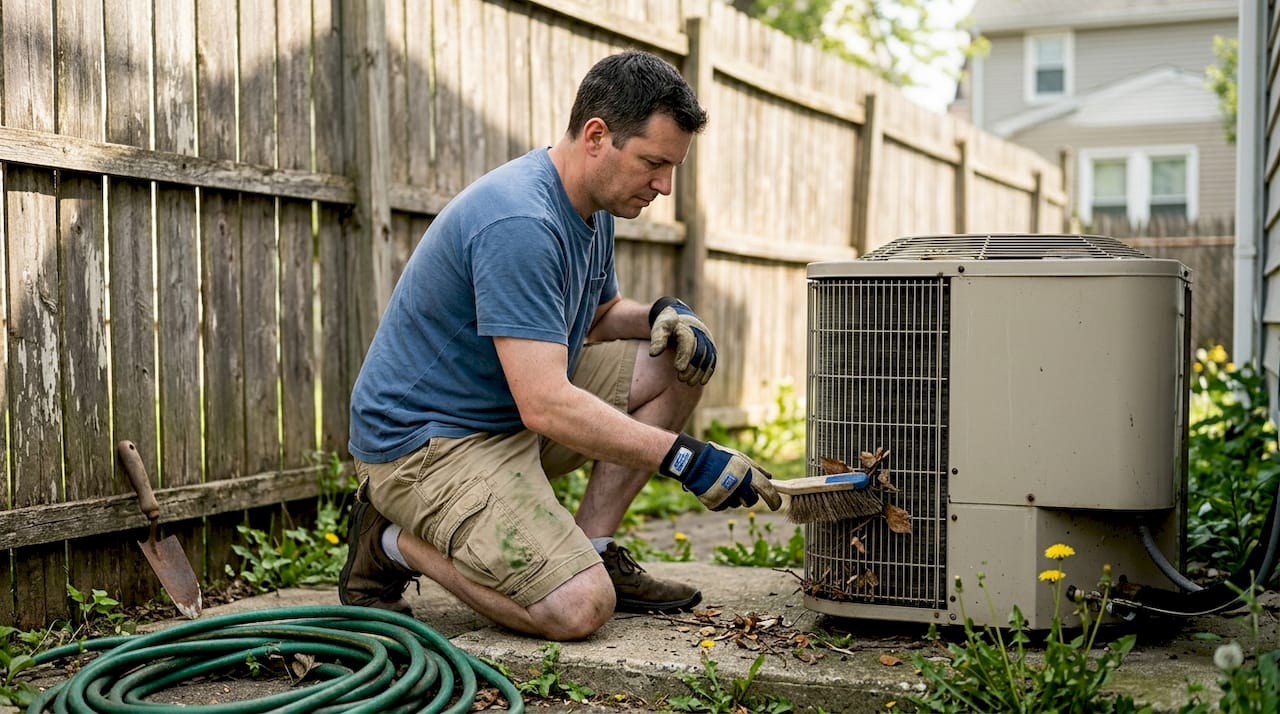
Start outside. Leaves, dirt, or debris on the outdoor unit can cause AC inefficiency by blocking the heat exchange process. With the system powered off at the disconnect box, remove any leaves, grass clippings, or branches piled against the unit. Gently rinse the coil fins with a garden hose, spraying from the inside out to push debris outward. Keep at least two feet of clear space around the entire unit.
Indoors, check every supply vent and return register in your home:
- Are any vents closed or blocked by furniture, rugs, or curtains?
- Is the area around your air handler clear of stored boxes or clutter?
- Do any vent covers look warped or clogged with dust?
Review the table below to understand how common obstructions affect your system. Learning how HVAC systems work makes it easier to spot these problems early.
| Obstruction | Location | Effect on AC |
|---|---|---|
| Leaves and debris | Outdoor condenser | Reduced heat exchange, overheating |
| Grass clippings | Condenser fins | Blocked airflow, higher energy use |
| Furniture over vents | Indoor supply vents | Poor air distribution, hot spots |
| Closed registers | Multiple rooms | Pressure imbalance, strained blower |
| Dirty evaporator coil | Air handler | Reduced cooling capacity, freeze risk |
For more on keeping your equipment in shape, the AC unit maintenance tips from Enhanced Heating & Air Conditioning offer practical guidance specific to our region’s conditions.
Step 4: Diagnose common cooling problems and know when to call for help
After ruling out easy fixes, it’s essential to understand what can be resolved by a homeowner versus what demands expert intervention. Some problems are genuinely DIY-friendly. Others are not, and trying to fix them yourself can make things worse or create safety risks.
Here are the most common AC problems Newark homeowners encounter:
- AC running but not cooling: Check the filter, thermostat, and outdoor unit first. If all are clear, the issue may be low refrigerant or a failing compressor.
- Frozen evaporator coil: Turn the system off and let it thaw completely, then replace the filter. If it freezes again, there’s likely a refrigerant or airflow problem that needs a technician.
- Warm air from vents: Could be a thermostat error, low refrigerant, or a faulty compressor. Start with the thermostat and filter check.
- Loud or unusual noises: Banging, squealing, or grinding sounds usually indicate mechanical wear that needs professional diagnosis.
- Water leaking indoors: A clogged condensate drain line can cause water backup. You can try flushing it with diluted bleach, but persistent leaks need professional attention.
Pro Tip: Always turn off power to your system at the breaker before touching any internal components, vents, or wiring. Safety comes first, every time.
| Issue | DIY-friendly? | Call a pro if… |
|---|---|---|
| Dirty filter | Yes | Freezing continues after replacement |
| Tripped breaker (once) | Yes | Breaker trips repeatedly |
| Blocked outdoor unit | Yes | Coil fins are bent or damaged |
| Closed or blocked vents | Yes | Airflow issues persist after clearing |
| Refrigerant leak | No | Always call a certified technician |
| Electrical fault or burning smell | No | Immediately call a professional |
| Frozen coil (recurring) | Partial | Call if it returns after filter change |
Certain repairs, like refrigerant leaks or electrical problems, should always be handled by a professional. Knowing the signs you should call an HVAC professional protects both your safety and your equipment.
Step 5: Schedule regular maintenance to prevent future issues
Finally, having resolved today’s problems, the best thing you can do is plan ahead to prevent issues tomorrow. Annual professional maintenance is the most reliable way to keep your AC running efficiently all season long.
Here’s what consistent maintenance does for your system:
- Catches small problems early before they turn into expensive repairs
- Cleans internal components like coils and drain lines that you can’t safely access yourself
- Verifies refrigerant levels and checks for slow leaks
- Tests electrical connections and measures system performance
- Supports manufacturer warranties, many of which require documented annual service
“Scheduling a professional inspection before peak season is one of the smartest investments Newark homeowners make. It’s far less expensive to tune up a system than to replace a compressor that failed because of a missed maintenance visit.” — Enhanced Heating & Air Conditioning
Preventive maintenance reduces the likelihood of major AC repairs and catches problems early, often before you even notice something is off. Pre-season checkups in spring are especially valuable here in Delaware, where summers can stress systems hard. If you’re weighing whether to repair or replace, understanding when to replace your HVAC system can help you make the most cost-effective decision.
When choosing a maintenance provider, look for NATE-certified technicians, clear pricing before work starts, and a company that stands behind its work with a warranty on parts and labor.
Our take: What most DIY guides miss about AC troubleshooting
Most DIY troubleshooting articles stop at the checklist. They tell you what to check but not what happens when the checklist doesn’t work, and that gap can cost Newark homeowners real money.
The steps above genuinely resolve a large percentage of AC problems. But the moment you’re dealing with refrigerant, electrical wiring, or a compressor issue, the DIY path stops being empowering and starts being risky. Refrigerant handling requires EPA certification. Wiring faults can start fires. Compressor diagnosis needs specialized tools most homeowners don’t own.
What we’ve seen after years of serving Newark, DE families is that the homeowners who call us quickly when something feels beyond their comfort level consistently spend less on repairs than those who wait. A small refrigerant leak caught early is a one-visit fix. The same leak ignored for a season can mean a full system replacement.
For affordable HVAC repair advice tailored to this region, local expertise matters more than a generic national guide. Our weather, humidity levels, and home construction types all affect how systems behave.
Pro Tip: Keep a simple log of every service call, filter change, and repair. When a technician asks “has anything changed recently?” that record is invaluable.
Let the pros help — Expert AC service in Newark, DE
Sometimes troubleshooting points you toward a solution you can handle yourself. Other times, it confirms you need experienced hands on the job. Either way, you’re better off knowing than guessing.
At Enhanced Heating & Air Conditioning, we help Newark, DE homeowners resolve AC not cooling issues, recurring breakdowns, and anything in between. Whether you need a fast diagnosis or a seasonal tune-up, our team is ready. Explore our full range of AC solutions for Newark homeowners or go ahead and schedule AC service in Newark, DE today. We offer free consultations and upfront pricing so you always know what to expect.
Frequently asked questions
Why is my air conditioner running but not cooling?
Incorrect settings and filter problems are common causes of cooling failures, along with a blocked condenser or low refrigerant. Start with thermostat settings and your air filter before calling a technician.
How often should I change my AC air filter?
Replace AC filters at least every one to three months to keep your system running efficiently and maintain good indoor air quality. Homes with pets or allergy sufferers may need monthly changes.
Can I fix a frozen AC coil myself?
Recurring frozen coils often point to complex issues like low refrigerant or restricted airflow that need expert attention. You can turn the system off and replace the filter, but call a professional if it freezes again.
What are signs I need a professional HVAC technician?
Burning smells, repeated breaker trips, water leaks, and certain repairs like refrigerant or electrical problems should always be handled by a certified HVAC technician for safety and proper repair.
How does regular HVAC maintenance help my AC system?
Preventive maintenance increases reliability and reduces long-term expenses by catching problems early, cleaning key components, and keeping your system running at peak efficiency throughout the season.

Joe Brooks is the owner of Enhanced Heating & Air Conditioning and has more than 23 years of experience serving homeowners and businesses in and around Newark Delaware. Over the past two decades, Joe has built Enhanced Heating & Air Conditioning by helping customers with heating, air conditioning, indoor air quality, HVAC maintenance, and system installation needs. His articles draw on years of hands-on industry experience and the real questions Enhanced customers ask about keeping their homes comfortable, efficient, and reliable. Joe and the Enhanced team serve Newark and communities throughout New Castle County and the surrounding Delaware area.