Essential Heat Pump Maintenance for Newark, DE Homeowners
Skipping heat pump maintenance might feel harmless until your utility bill spikes by hundreds of dollars or your system quits during a January cold snap. For Newark, DE homeowners, a heat pump handles both heating and cooling year-round, which means wear accumulates faster than most people expect. The good news is that a consistent maintenance routine can prevent the most expensive breakdowns, keep your energy bills in check, and add years to your system’s life. This guide walks you through everything you need to know, from understanding your system to completing hands-on tasks and knowing when to call in a pro.
Table of Contents
- Understanding your heat pump system
- Preparing for heat pump maintenance
- Step-by-step heat pump maintenance tasks
- Verifying results and troubleshooting common problems
- What most homeowners overlook about heat pump maintenance
- Enhance your comfort with professional heat pump service
- Frequently asked questions
Key Takeaways
| Point | Details |
|---|---|
| Know your system | Understanding your heat pump type and operation enables effective maintenance and troubleshooting. |
| Prepare safely | Proper preparation with the right tools and safety steps maximizes maintenance success and reduces risk. |
| Follow expert routines | Consistent, step-by-step tasks improve energy efficiency and prevent costly breakdowns. |
| Verify and adapt | Checking results and adjusting maintenance to local conditions keeps your home comfortable year-round. |
| Professional help pays off | When issues persist or tasks are complex, trained technicians ensure lasting performance and peace of mind. |
Understanding your heat pump system
A heat pump does not generate heat the way a furnace does. Instead, it moves heat from one place to another. In winter, it pulls heat from outdoor air (or the ground) and transfers it inside. In summer, it reverses the process, pulling heat out of your home and releasing it outside. This makes heat pumps remarkably efficient, but it also means every component needs to be in good shape for the system to work properly.
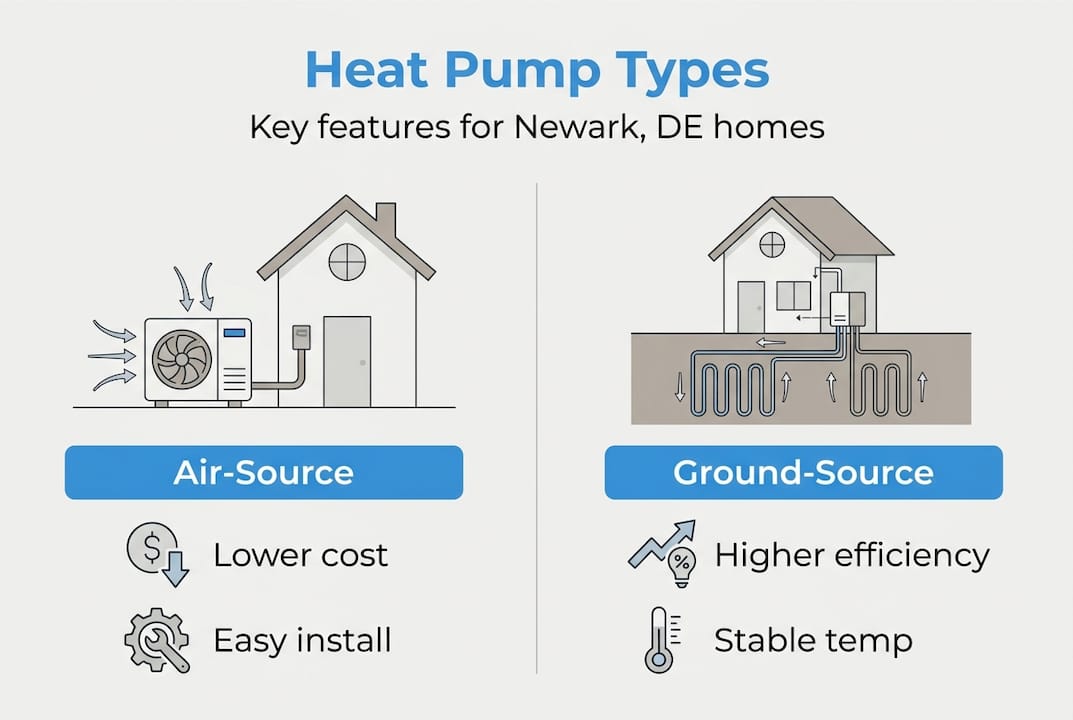
There are two main types you’ll find in Newark, DE homes:
- Air-source heat pumps: These are the most common. They exchange heat with outdoor air and work well in moderate climates like Delaware’s.
- Ground-source (geothermal) heat pumps: These use underground loops to exchange heat with the earth. They’re more efficient but cost more to install.
Here’s a quick comparison to help you understand the differences:
| Feature | Air-source | Ground-source |
|---|---|---|
| Installation cost | Lower | Higher |
| Efficiency in cold weather | Moderate | High |
| Maintenance complexity | Standard | More involved |
| Best for | Most homes | Larger properties |
Both types share one thing in common: regular service is crucial for optimal performance and lifespan. Without it, efficiency drops, parts wear out faster, and small issues turn into costly repairs.
Understanding heating system maintenance frequency is the first step toward protecting your investment. Heat pumps run in both seasons, so they accumulate more operational hours than a system used only for heating or only for cooling. That’s exactly why proactive care matters more here than with most other HVAC equipment.
For homeowners already managing other heating equipment, the principles behind forced air heating tips apply here too: clean components, clear airflow, and timely inspections are the foundation of a reliable system.
Preparing for heat pump maintenance
Before you touch anything, preparation is what separates a safe, effective maintenance session from a wasted afternoon or a safety hazard. Proper preparation improves maintenance results and safety, so don’t skip this step.
Tools and supplies you’ll need:
- Soft brush or coil cleaning brush
- Garden hose with adjustable nozzle
- Replacement air filters (check your system’s size first)
- Screwdriver set (flathead and Phillips)
- Flashlight
- Fin comb (for straightening bent coil fins)
- Manufacturer’s manual
Safety steps before you start:
- Shut off power to the unit at the breaker box
- Allow the system to sit for at least 30 minutes before touching internal components
- Review your manufacturer’s manual for model-specific warnings
- Never attempt refrigerant-related work yourself; this requires a licensed technician
Newark, DE experiences four distinct seasons, which means your heat pump shifts between heating and cooling modes twice a year. That transition period is the ideal time for maintenance. Here’s a simple seasonal schedule to follow:
| Season | Maintenance focus |
|---|---|
| Spring (before cooling season) | Clean coils, replace filter, check refrigerant lines |
| Fall (before heating season) | Clear debris, inspect wiring, test thermostat |
| Mid-winter | Check airflow, monitor for ice buildup |
| Mid-summer | Inspect outdoor unit, verify drainage |
Pro Tip: Set a recurring calendar reminder two weeks before each season change. That gives you time to order replacement filters and schedule a professional visit if needed before peak demand hits.
If you haven’t already reviewed our HVAC winterizing guide, it’s worth reading before your fall prep session. Newark winters can be hard on outdoor components, and a few extra steps in October can prevent problems in February.
Step-by-step heat pump maintenance tasks
With your tools ready and power safely off, you’re ready to work through the actual maintenance tasks. Routine checks and cleaning help sustain performance and prevent breakdowns, so work through this list methodically.
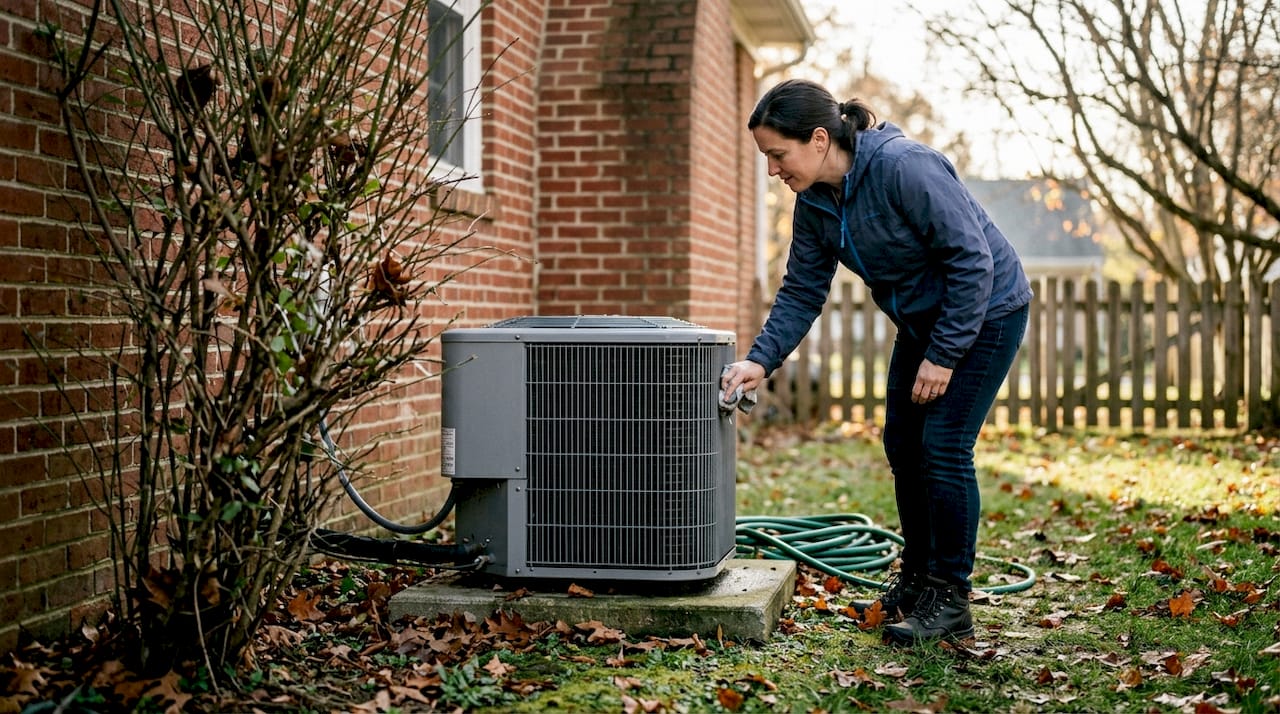
- Clear debris from the outdoor unit. Remove leaves, grass clippings, and dirt from around and inside the unit. Keep at least 18 inches of clearance on all sides for proper airflow.
- Clean the coils. Use a soft brush to remove surface dirt, then rinse the coils gently with a garden hose. Spray from the inside out to push debris away from the unit. Avoid high-pressure spraying, which can bend the fins.
- Straighten bent fins. Use a fin comb to carefully straighten any bent aluminum fins on the coil. Bent fins restrict airflow and reduce efficiency.
- Replace or clean the air filter. A clogged filter is one of the most common causes of reduced efficiency. Replace disposable filters every 1 to 3 months, or clean reusable ones according to the manufacturer’s instructions.
- Test the thermostat. Set your thermostat to heating mode, raise the target temperature above room temperature, and confirm the system kicks on within a few minutes. Repeat for cooling mode.
- Inspect wiring and connections. With the power still off, look for any visibly frayed wires, loose connections, or signs of corrosion near the electrical panel of the unit. If you see anything concerning, stop and call a technician.
- Check refrigerant lines. Look for ice buildup, oil stains, or visible damage on the insulated lines running between your indoor and outdoor units. These are signs of a refrigerant issue that needs professional attention.
A heat pump that runs constantly without reaching your set temperature is not just uncomfortable. It’s a system telling you something is wrong. Don’t ignore it.
Pro Tip: After cleaning the outdoor coil, let it dry completely before restoring power. Running the system with a wet coil is not dangerous, but giving it 15 minutes to air out is a good habit.
Understanding the furnace maintenance benefits of staying consistent applies equally to heat pumps. Systems that receive regular attention simply last longer and cost less to operate over time.
Verifying results and troubleshooting common problems
Once you’ve completed your maintenance tasks, don’t just flip the breaker and walk away. Take 20 to 30 minutes to verify that everything is working as it should.
How to check system performance:
- Restore power and let the system run for at least 15 minutes
- Hold a thermometer near a supply vent and compare the output temperature to your thermostat setting
- Walk through each room to check for consistent airflow from all vents
- Listen for any unusual sounds: grinding, squealing, or banging are red flags
- Check the outdoor unit to confirm the fan is spinning freely and the coil is not icing over
Common problems and what they mean:
- Uneven temperatures across rooms: Could indicate duct leaks, a dirty filter, or a failing blower motor
- Grinding or squealing noises: Often a sign of worn bearings in the fan motor
- Ice on the outdoor unit (outside of defrost cycles): Points to low refrigerant or restricted airflow
- Short cycling (system turns on and off rapidly): May indicate an oversized system, refrigerant issue, or electrical fault
Professional maintenance can improve energy efficiency by up to 25%, which translates to real savings on your monthly utility bills. That number adds up fast over a Delaware winter.
If any of the problems above persist after your maintenance session, it’s time to schedule a professional visit. Booking through a maintenance HVAC services schedule ensures a licensed technician can diagnose what you can’t see, including refrigerant levels, electrical faults, and internal component wear.
What most homeowners overlook about heat pump maintenance
Here’s something we’ve seen repeatedly in Newark, DE: homeowners who do everything right once a year still end up with underperforming systems. The problem isn’t effort. It’s timing.
Treating heat pump maintenance as an annual task ignores the fact that your system’s demands shift dramatically between seasons. A unit that handled summer cooling without complaint may struggle in November if coils weren’t cleaned before the heating season started. Delaware’s mix of humid summers and cold winters creates two distinct stress periods for your equipment, not one.
The homeowners who get the most out of their systems are the ones who check in twice a year at minimum and pay attention to how the system behaves between those checks. Unusual sounds in October are not something to note and forget. They’re a signal to act before the coldest weeks arrive.
Consistent attention to local furnace maintenance benefits shows that systems maintained on a seasonal schedule run more efficiently and require fewer emergency repairs. The hidden payoff is not just lower bills. It’s the comfort of knowing your system won’t let you down when you need it most.
Enhance your comfort with professional heat pump service
You’ve now got a solid foundation for maintaining your heat pump on your own. But some tasks go beyond what any homeowner should handle without professional tools and training.
At Enhanced Heating & Air Conditioning, we work with Newark, DE homeowners every season to keep heat pumps running at peak efficiency. Whether you need a full seasonal tune-up, a second opinion on a persistent issue, or help planning your next system upgrade, our team is ready to help. Reach out to our local HVAC service experts to schedule a visit, or review our list of questions for HVAC contractors to make sure you’re getting the most from any professional service call.
Frequently asked questions
How often should I service my heat pump in Newark, DE?
Routine biannual maintenance is recommended for optimal performance. Service your heat pump at least once every six months to account for Newark’s seasonal climate shifts.
What are the signs my heat pump needs maintenance?
If you notice decreased airflow, higher utility bills, or unusual noises, your system needs servicing. Unusual sounds and inefficiency are reliable early indicators that maintenance is overdue.
Can I perform heat pump maintenance myself?
You can clean filters, check controls, and clear debris around the outdoor unit. Basic maintenance is homeowner-friendly, but advanced repairs and refrigerant work require a licensed technician.
Does regular maintenance really improve energy efficiency?
Yes. Routine maintenance reduces energy consumption by up to 25%, which adds up to significant savings over a full heating and cooling season.
When should I call a heat pump professional?
If maintenance tasks don’t resolve your issues or you suspect electrical or refrigerant problems, contact an expert immediately. Complex electrical or refrigerant faults always require professional intervention to avoid safety risks and system damage.
Recommended
- How Often to Get Heating System Maintenance Services | Enhanced Heating and Air ConditioningEnhanced Heating and Air Conditioning
- Heat Pump How to Install in Newark De: Step-by-step Guide | Enhanced Heating and Air ConditioningEnhanced Heating and Air Conditioning
- How to Find Hvac Maintenance & Repair Services | Enhanced Heating and Air ConditioningEnhanced Heating and Air Conditioning
- How to Choose Heating and Cooling Services for Your Home | Enhanced Heating and Air ConditioningEnhanced Heating and Air Conditioning