HVAC Troubleshooting Guide: DIY Fixes for Newark, DE
It’s 7 a.m. in January, the temperature outside has dropped to 18°F, and your furnace just quit. Or maybe it’s a sweltering August afternoon and your air conditioner is blowing warm air. For Newark, DE homeowners, these moments are more than inconvenient — they’re urgent. The good news is that many common HVAC problems have simple fixes you can handle yourself, often in under an hour. This guide walks you through everything from basic system knowledge to hands-on troubleshooting steps, so you can restore comfort quickly, safely, and without always reaching for the phone.
Table of Contents
- Understanding your HVAC system: Basics and common issues
- Prep checklist: Tools, materials, and safety essentials
- Step-by-step HVAC troubleshooting for common problems
- Preventive maintenance tips to avoid future HVAC headaches
- Our perspective: What most HVAC troubleshooting guides miss
- Connect with trusted HVAC experts in Newark, DE
- Frequently asked questions
Key Takeaways
| Point | Details |
|---|---|
| Start with simple checks | Most HVAC issues are caused by incorrect thermostat settings, dirty filters, or tripped breakers. |
| Use the right tools | Having a basic toolkit and safety gear ensures safe and efficient DIY troubleshooting. |
| Ducts impact efficiency | Leaky ducts can lose up to 30 percent of your system’s airflow and waste energy. |
| Maintenance prevents breakdowns | Annual professional tune-ups extend HVAC life and lower energy bills. |
| Know when to call a pro | Contact a Newark, DE HVAC expert for unresolved or hazardous problems. |
Understanding your HVAC system: Basics and common issues
Before you can fix a problem, you need to understand what you’re working with. HVAC stands for Heating, Ventilation, and Air Conditioning. Your system is made up of several key components working together: the furnace or heat pump (which generates or moves heat), the air conditioner (which removes heat from inside your home), the ductwork (which carries conditioned air throughout the house), and the thermostat (which controls the whole operation).
Think of your HVAC system like a car engine. Each part depends on the others. When one piece fails or underperforms, the entire system suffers. A dirty filter is the equivalent of a clogged air intake — it chokes the system and forces everything to work harder.
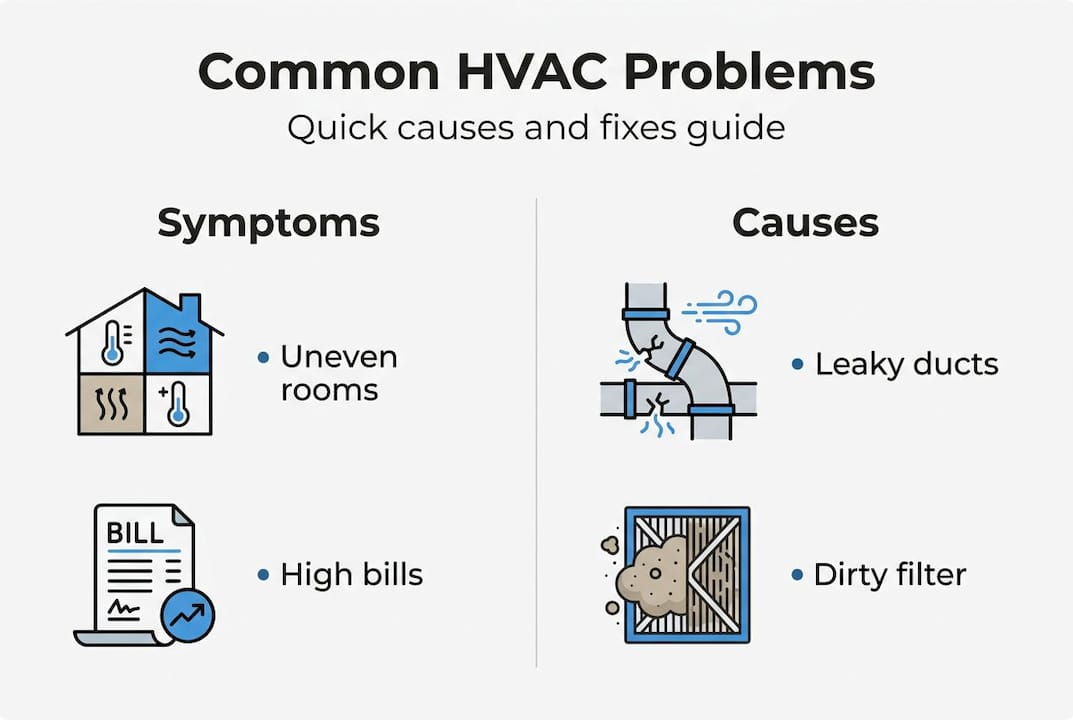
The most common symptoms Newark homeowners notice include uneven heating or cooling from room to room, energy bills that keep climbing for no obvious reason, weak airflow from registers, and strange noises like banging or squealing. These aren’t random — they point to specific root causes.
Here’s a quick look at the most frequent HVAC problems and their typical causes:
| Symptom | Likely Cause |
|---|---|
| Uneven temperatures | Leaky ducts, blocked vents |
| High energy bills | Dirty filter, aging equipment |
| Weak airflow | Clogged filter, duct obstruction |
| System won’t start | Thermostat error, tripped breaker |
| Unusual noises | Loose parts, debris in system |
Regular maintenance is your best defense against all of these. Annual tune-ups extend system life and cut energy costs — a fact ENERGY STAR consistently reinforces in their home efficiency guidance. Skipping tune-ups is one of the most expensive mistakes homeowners make, often turning a $150 service call into a $1,500 repair.
Poor indoor air quality is another major consequence of neglected systems. Dust, allergens, and mold can circulate freely when filters are dirty and ducts go unchecked. Our team at Enhanced Heating & Air Conditioning offers HVAC services in Newark designed to keep your system running clean and efficient year-round. If you’re curious about what maintenance typically costs, reviewing HVAC service costs ahead of time helps you budget with confidence.
Knowing your system’s parts and common failure points puts you in a much stronger position when something goes wrong.
Prep checklist: Tools, materials, and safety essentials
With a basic understanding of your system, gather everything you’ll need for safe and effective troubleshooting. Jumping in without the right tools wastes time and can create new problems.
Here’s what you’ll want on hand before starting:
- Flathead and Phillips screwdrivers
- A flashlight or headlamp for inspecting dark areas like attic ducts
- Work gloves to protect your hands from sharp sheet metal edges
- A replacement air filter (more on the right type below)
- Your HVAC owner’s manual
- A voltage tester to verify power is off before touching wiring
- A notepad to log what you inspect and any findings
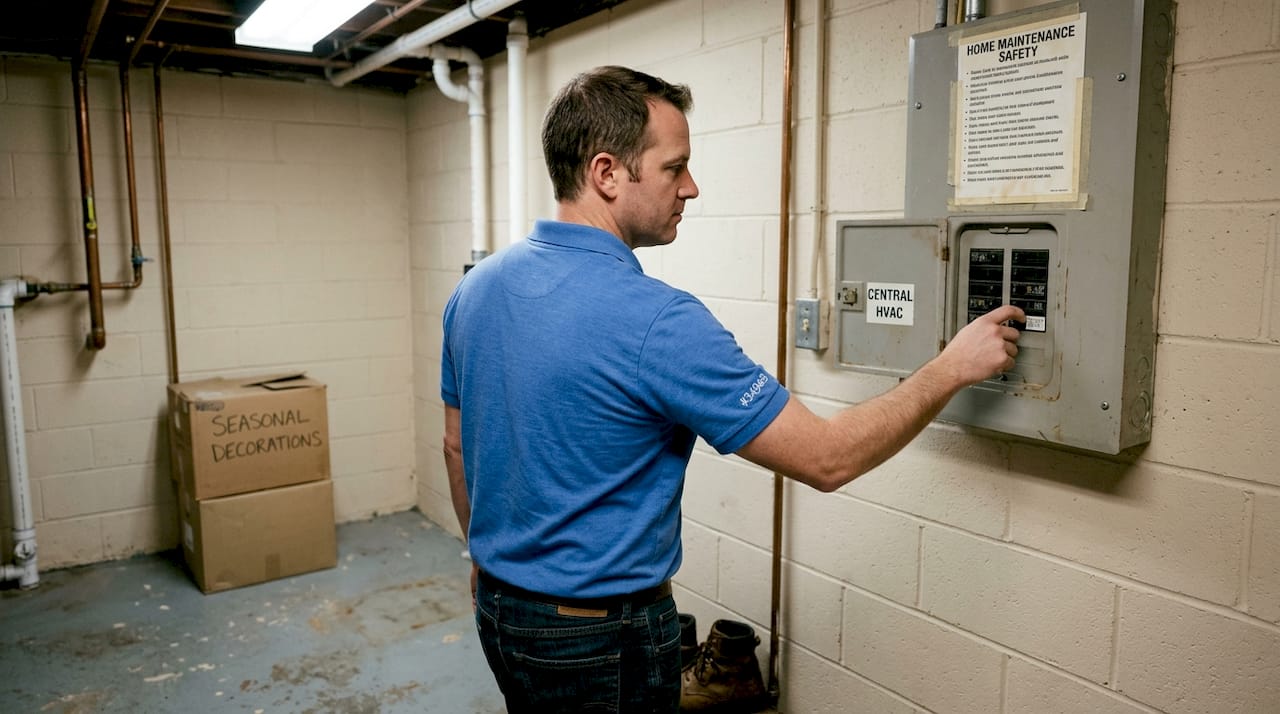
Safety comes first, always. Before opening any panel or touching internal components, shut off power to the unit at the circuit breaker. Never assume the system is off just because it isn’t running. Wear gloves and eye protection, and keep a fire extinguisher nearby if you’re working near the furnace.
Here’s a side-by-side comparison of DIY tools versus what a professional brings:
| Tool/Resource | DIY Homeowner | HVAC Professional |
|---|---|---|
| Screwdrivers, flashlight | Yes | Yes |
| Voltage tester | Basic | Advanced |
| Refrigerant gauges | No | Yes |
| Duct pressure testing equipment | No | Yes |
| Combustion analyzer | No | Yes |
| Diagnostic software | No | Yes |
The filter deserves special attention. MERV 13 filters are recommended by the EPA for improved indoor air quality — they trap finer particles than standard filters, including some bacteria and smoke. Change them every 2 to 3 months, or more often if you have pets or allergies.
For support with more involved maintenance tasks, our finding HVAC maintenance page walks you through what a professional service visit covers.
“The right filter is one of the cheapest and most impactful upgrades a homeowner can make to their HVAC system.”
Pro Tip: Put together a small seasonal toolkit — a zip-up bag with your filter, gloves, flashlight, and manual — and store it near your HVAC unit. When something goes wrong, you won’t waste 20 minutes hunting for tools.
Step-by-step HVAC troubleshooting for common problems
Fully equipped and ready, follow these step-by-step instructions to solve frequent HVAC issues. Work through them in order before assuming you need a professional.
- Check the thermostat. Make sure it’s set to the correct mode (heat or cool) and the temperature is set above or below the current room temperature. Replace the batteries if the display looks dim or blank.
- Inspect the air filter. A clogged filter is the most common cause of poor airflow and system strain. If it’s gray or visibly dirty, replace it immediately.
- Check the circuit breaker. Head to your electrical panel and look for any tripped breakers. If the HVAC breaker is in the middle position, flip it fully off, then back on.
- Inspect visible ductwork. Look for disconnected sections, holes, or obvious gaps. Leaking ducts can lose up to 30% of conditioned air before it ever reaches your living space, driving up energy bills significantly.
- Listen for unusual noises. A banging sound often means a loose component. Squealing can indicate a belt or motor issue. Clicking that doesn’t stop could point to a relay problem.
- Clear all supply and return vents. Make sure furniture, rugs, and curtains aren’t blocking airflow. Even one blocked vent can throw off the whole system’s balance.
Most of these steps take only a few minutes each. Many Newark homeowners are surprised to find the fix was as simple as a tripped breaker or a blocked vent.
Pro Tip: Label every circuit breaker in your electrical panel clearly. When your AC stops working on a 95°F afternoon, you don’t want to be guessing which breaker controls it.
Scheduling annual tune-ups after completing your own troubleshooting is a smart move — a professional can catch what you can’t see. If your issue involves burning smells, electrical sparks, or refrigerant leaks, stop immediately and contact local HVAC repair services. Some repairs require licensed technicians for legal and safety reasons. Learn more about what to expect when choosing heating and air services for your home.
Preventive maintenance tips to avoid future HVAC headaches
After troubleshooting, keep your system in peak shape with these proactive maintenance steps. Fixing a problem once is good. Preventing it from coming back is even better.
Here’s a seasonal maintenance checklist to keep on your refrigerator:
- Change your air filter every 2 to 3 months (more often with pets)
- Test your thermostat at the start of each season
- Clear debris from the outdoor AC condenser unit
- Check and clean supply and return vents
- Inspect visible ductwork for gaps or disconnections
- Schedule a professional tune-up once a year
- Test your carbon monoxide detector and smoke alarms
Duct sealing deserves its own spotlight. Most homeowners never think about their ducts until something goes wrong. But poorly sealed ducts are silently draining your wallet. The energy loss from leaking ductwork adds up to serious money over a heating or cooling season.
| Maintenance Task | Frequency | DIY or Pro? |
|---|---|---|
| Filter replacement | Every 2-3 months | DIY |
| Thermostat calibration | Seasonally | DIY |
| Duct inspection | Annually | Pro |
| Coil cleaning | Annually | Pro |
| Refrigerant check | As needed | Pro only |
| Full system tune-up | Annually | Pro |
Annual tune-ups remain one of the highest-return investments a homeowner can make — ENERGY STAR backs this up with data showing measurable energy savings and extended equipment life. For homeowners with forced air systems, our forced air maintenance tips page covers specific steps for that setup. You can also explore the furnace maintenance benefits that come from consistent professional care.
Using MERV 13 filters also plays a direct role in indoor air quality, which matters especially in tightly sealed Newark homes during winter months when windows stay shut for weeks at a time.
Pro Tip: Set a calendar reminder on the first day of each season to run through your checklist. It takes less than 30 minutes and can prevent a service call costing ten times that amount.
Our perspective: What most HVAC troubleshooting guides miss
Most guides stop at the checklist. They tell you to change your filter and check your thermostat, which is solid advice. But they rarely acknowledge the bigger picture: DIY maintenance and professional service aren’t competing options. They work best together.
We’ve seen homeowners in Newark do everything right on their own and still end up with poor performance because a hidden duct issue or refrigerant problem was quietly running the show. Those are problems no flashlight and screwdriver will solve.
The other thing guides often skip is the air quality connection. MERV 13 filters aren’t just about system efficiency — they genuinely affect the health of everyone living in your home. If you have kids with asthma or elderly family members, this matters more than any energy bill savings.
Not staying current on maintenance doesn’t just hurt your wallet slowly. It accelerates equipment failure in ways that compound over years. Our HVAC maintenance services are built around catching these hidden issues before they become expensive emergencies. The homeowners who call us for emergency repairs almost always tell us the same thing: they knew something was off but kept putting it off.
Don’t be that homeowner.
Connect with trusted HVAC experts in Newark, DE
If you want complete peace of mind or run into a trickier HVAC issue, expert help is only a call away. DIY troubleshooting goes a long way, but some problems require professional tools, certifications, and experience to fix correctly and safely.
At Enhanced Heating & Air Conditioning, we serve Newark, DE homeowners with honest diagnostics, transparent pricing, and repairs that actually last. Whether you need a full system inspection or a targeted fix, our team is ready. Visit our HVAC Newark DE home page to learn more about what we offer. If your cooling system is giving you trouble, our AC service repair Newark page covers what to expect. You can also request a visit through our repair AC service Newark page and get a free consultation today.
Frequently asked questions
What are the first steps to troubleshoot my HVAC if it won’t turn on?
Check the thermostat settings, circuit breaker, and air filter first, as these are the most common and easily fixed issues. If all three check out and the system still won’t start, a professional tune-up can identify deeper electrical or mechanical faults.
How often should I really change my HVAC air filter?
Replace your MERV 13 filter every 2 to 3 months, or more often if you have pets or allergies, per EPA guidance. Homes with heavy dust or multiple occupants may need monthly changes.
Is duct sealing really important for energy efficiency?
Yes, as leaking ducts can lose up to 30% of conditioned air and significantly increase energy costs. Professional duct sealing is one of the highest-return improvements you can make.
When should I call an HVAC professional instead of troubleshooting myself?
If troubleshooting steps don’t resolve the issue, or you detect burning smells, electrical problems, or refrigerant leaks, contact a licensed pro immediately. These situations carry real safety risks that go beyond DIY repairs.
Do annual HVAC tune-ups really save money in the long run?
Yes, ENERGY STAR notes that annual professional maintenance improves efficiency and helps prevent costly breakdowns. Most homeowners recoup the tune-up cost in energy savings within the same season.
Recommended
- AC Troubleshooting Steps Every Newark Homeowner Needs
- How to Find Hvac Maintenance & Repair Services | Enhanced Heating and Air ConditioningEnhanced Heating and Air Conditioning
- HVAC Repair Services Near Me in Newark, Delaware | Enhanced Heating and Air ConditioningEnhanced Heating and Air Conditioning
- Heating Furnace Repair Service Newark De | Enhanced Heating and Air ConditioningEnhanced Heating and Air Conditioning