
How to install central air in Newark, DE: a homeowner’s guide
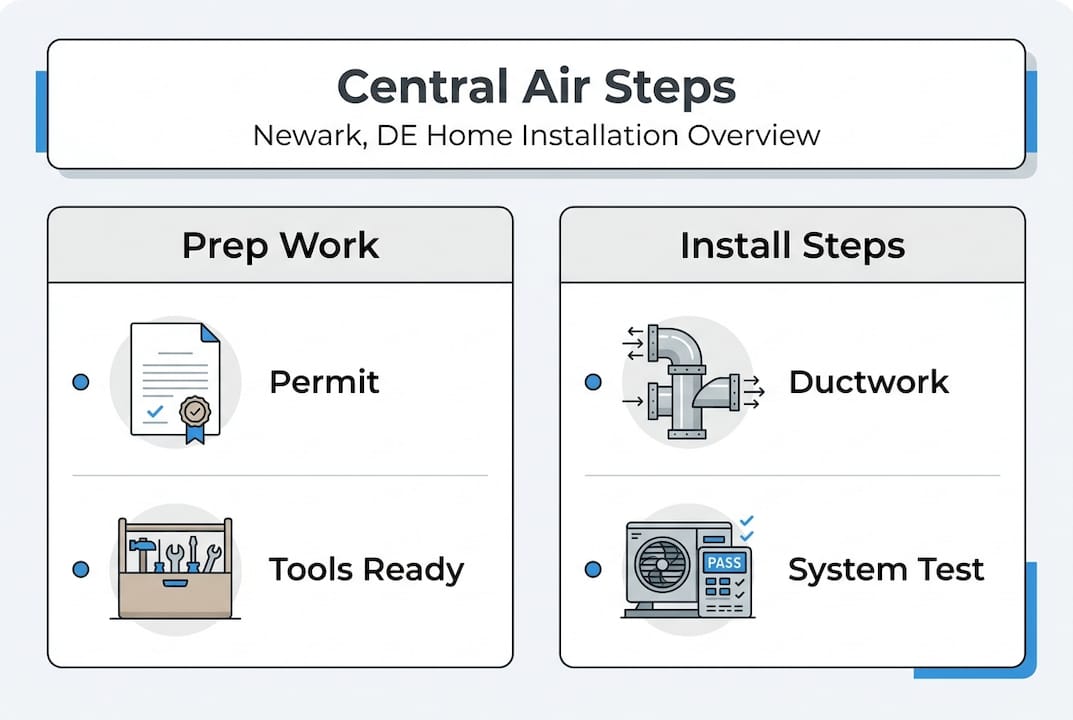
Newark, DE summers are no joke. Temperatures climb into the 90s, humidity makes every room feel like a sauna, and window units just can’t keep up with a whole house. If you’re tired of sweating through July and watching your electric bill spike anyway, installing central air conditioning is the upgrade your home needs. But this isn’t a simple weekend project. Between Delaware’s licensing rules, New Castle County permit requirements, and the science of sizing a system correctly, there’s a lot to get right. This guide walks you through every stage, from legal requirements to final inspection, so you know exactly what to expect.
Table of Contents
- What you need before you start: regulations, tools, and prepping your home
- Sizing your system: why Manual J load calculations matter
- Step-by-step installation: what to expect during central air installation
- Avoiding common mistakes and final checks
- A local pro’s perspective: what most guides miss about central air in Newark, DE
- Ready for stress-free central air installation in Newark, DE?
- Frequently asked questions
Key Takeaways
| Point | Details |
|---|---|
| Licensed pros required | Delaware law means only certified HVACR contractors can perform most installation steps. |
| Manual J is essential | Proper system sizing prevents high bills and keeps you comfortable even during Newark summers. |
| Permits and inspections | You must secure a county permit and pass inspections to ensure a legal, safe install. |
| DIY is limited | Homeowners can prepare but not perform refrigerant or electrical work without proper certification. |
| Mistakes are costly | Avoid skipped steps like load calcs and duct checks to save time, money, and stress in the long term. |
What you need before you start: regulations, tools, and prepping your home
Before anyone touches a single wire or refrigerant line, you need to understand what the law requires in Newark. Delaware requires a Master HVACR license for contractors performing installation work, and refrigerant handling specifically demands EPA 608 Certification. That means most of this project is legally off-limits for DIY. You can prep your home, but the technical work must go to a licensed pro.
On top of licensing, New Castle County requires mechanical permits for any HVAC installation or replacement in Newark. Fees are based on project valuation, and both rough-in and final inspections are required before your system can legally operate. Skipping this step isn’t just risky — it can void your homeowner’s insurance and your equipment warranty.
To find the right contractor, start by exploring air conditioning installation near me or reviewing your options for choosing heating and air services in your area.
Working without permits or a licensed pro can void warranties and insurance. Never cut corners on this step.
Here’s a quick overview of tools and materials involved and who’s responsible for each:
| Item | Supplied by | Responsibility |
|---|---|---|
| Air handler / condenser unit | Contractor or homeowner | Contractor installs |
| Refrigerant lines | Contractor | Licensed pro only |
| Ductwork materials | Contractor | Contractor installs |
| Thermostat | Homeowner or contractor | Contractor wires |
| Permit paperwork | Homeowner files or contractor assists | Both parties |
| Electrical panel access | Homeowner provides | Electrician if upgrade needed |
For home prep, your job is to clear a path for the installation crew. That means removing stored items from the attic or basement where ductwork will run, ensuring your electrical panel is accessible, and confirming your home has adequate insulation. The smoother the access, the faster the job.
Key prep steps before your contractor arrives:
- Clear attic, basement, and utility room access
- Locate and label your electrical panel
- Note any rooms with persistent hot or cold spots
- Gather any existing HVAC documentation or blueprints
- Confirm your HOA (if applicable) allows exterior condenser placement
Pro Tip: Have all county permit paperwork organized before your contractor’s first visit. Delays in permitting are the number one reason installations run over schedule.
Sizing your system: why Manual J load calculations matter
With prep complete, your next critical decision is getting the right system size. This is where a lot of homeowners get burned, not because they chose a bad brand, but because they chose the wrong size.
Manual J calculates heat gain and loss based on your home’s insulation quality, window types, orientation, local climate, and occupancy. In Delaware, humidity plays a huge role in that calculation. A system that’s too large will cool the air fast but won’t run long enough to pull moisture out, leaving your home feeling clammy. A system that’s too small will run constantly and still leave you uncomfortable.
Here’s how the three scenarios compare for a typical Newark home:
| System size | Comfort level | Energy cost | Equipment lifespan |
|---|---|---|---|
| Oversized | Uneven, humid | High (short-cycling) | Shorter |
| Undersized | Never fully cool | Very high (constant run) | Much shorter |
| Correctly sized | Consistent, dry | Lowest | Longest |
For a 2,000 square foot Newark home, you’re typically looking at around 3 tons of cooling capacity, but that number shifts based on your specific inputs. Proper sizing can reduce energy use by 20 to 40% compared to a guessed or rule-of-thumb approach. That’s real money back in your pocket every month.
A licensed contractor gathers the following inputs to complete your Manual J:
- Total square footage and ceiling height
- Window size, type, and orientation (south-facing windows gain more heat)
- Insulation R-values in walls, attic, and floors
- Number of occupants and typical heat-generating appliances
- Local climate data specific to the Newark, DE region
- Duct layout and any existing air sealing
For more detail on how these calculations affect your install, review these AC installation guidelines before your contractor visit.
Pro Tip: Ask your contractor for a printed copy of the Manual J summary. If you ever upgrade your system or add square footage, that document saves your next contractor hours of recalculation.
Step-by-step installation: what to expect during central air installation
Once your system is sized, it’s time to see how the installation process unfolds. A professional central air install follows a clear sequence, and knowing it helps you stay informed without getting in the way.
The installation sequence:
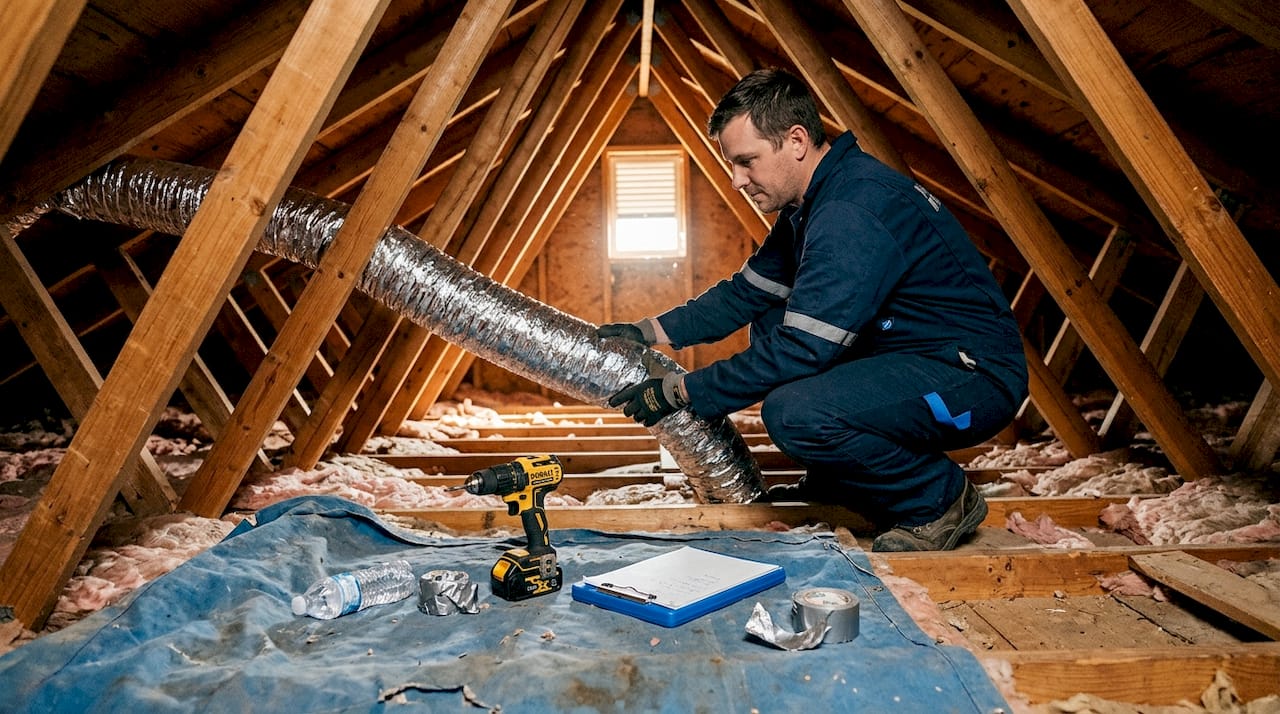
- Ductwork evaluation and repair or replacement as needed
- Air handler placement (attic, basement, or utility closet)
- Refrigerant line set installation between air handler and condenser
- Outdoor condenser unit placement and pad installation
- Electrical connections and circuit breaker additions
- Thermostat installation and wiring
- Refrigerant charging by EPA-certified technician
- System startup and airflow balancing
- Rough-in inspection by New Castle County inspector
- Final inspection and permit sign-off
Mechanical permits and inspections are required at both the rough-in and final stages. At rough-in, the inspector checks that ductwork, line sets, and electrical rough work meet code before walls or ceilings are closed. At final inspection, the system must be running and all connections verified.
Do not attempt refrigerant handling under any circumstances. EPA certification is legally required, and improper handling is both dangerous and a federal violation.
Here’s a breakdown of who does what and when:
| Task | Responsible party | Timing |
|---|---|---|
| Clear work areas | Homeowner | Before day 1 |
| Duct inspection and repair | Contractor | Day 1 |
| Equipment installation | Contractor | Days 1 to 2 |
| Electrical upgrades (if needed) | Licensed electrician | Day 1 to 2 |
| Permit inspection scheduling | Contractor or homeowner | After rough-in |
| Final system test | Contractor | Day 2 to 3 |
Expect some noise and disruption, especially during ductwork runs through walls or ceilings. Most professional installs wrap up in one to three days. Code upgrades, like adding a dedicated circuit or upgrading insulation around duct runs, can add a day. For a smooth experience, check the full installation service steps so you know what’s coming.
Avoiding common mistakes and final checks
You’ve seen the steps. Now, learn how to keep your hard-earned upgrade running perfectly from day one.
The most common installation mistakes Newark homeowners encounter are preventable. Many come down to rushing, skipping paperwork, or assuming the contractor handles everything without any homeowner follow-up.
Common mistakes to watch for:
- Pulling permits late or skipping them entirely
- Neglecting duct cleaning before connecting a new system
- Installing the wrong filter size for the air handler model
- Poor attic insulation allowing heat gain to overwhelm the new system
- Thermostats not programmed or synced to the new equipment
- Failing to schedule the final inspection before using the system
Missed inspections and skipped permits create real risk: fines, failed resale inspections, and systems that operate outside of code. It’s not worth the shortcut.
On the efficiency side, re-checking and sealing ductwork after installation can boost system efficiency by up to 20%. Leaky ducts are one of the most overlooked energy drains in any home, and a new system pushing air through old leaky ducts is money wasted immediately.
Your final homeowner checklist:
- Confirm permit sign-off paperwork is in your possession
- Test airflow in every room and note any weak spots
- Verify the thermostat is programmed correctly for your schedule
- Review all documentation from your contractor (warranty cards, system specs)
- Ask about filter replacement schedule and size
Pro Tip: Before your contractor leaves for the last time, schedule your first annual maintenance visit on the spot. Systems that receive yearly tune-ups last significantly longer and keep energy bills predictable. You can book ahead through HVAC maintenance services to lock in your preferred time.
A local pro’s perspective: what most guides miss about central air in Newark, DE
Most online installation guides treat Manual J like an optional formality. In Newark, DE, it’s anything but. Delaware’s combination of humid summers and older housing stock means a sizing shortcut almost always leads to a system that short-cycles, struggles with moisture, or runs your bills up within the first season. We’ve seen it happen repeatedly.
Permitting is also more layered than most homeowners expect. New Castle County’s process involves real inspections with real consequences if you skip them. Many guides written for general audiences gloss over this entirely. Local contractors who work in Newark know the inspectors, understand the current code cycle, and can flag issues before they become expensive surprises.
The biggest misconception we hear is that hiring a licensed pro is just about paying more. It’s actually about protecting your investment. A failed inspection or a system sized by guesswork costs far more to fix than the upfront cost of doing it right. If you want trusted installation pros in Newark, the difference shows up in your comfort and your energy bill for years.
Ready for stress-free central air installation in Newark, DE?
Armed with expert insight and practical steps, you’re ready to make a smart installation decision.
At Enhanced Heating & Air Conditioning, we handle every detail: permits, load calculations, licensed installation, and final inspection coordination. You don’t have to figure out New Castle County’s process on your own. Our team provides no-obligation estimates, clear timelines, and ongoing support after the job is done. Explore our full range of HVAC services in Newark, DE or dive deeper into our AC installation experts page to see how we approach every project. When you’re ready to schedule, our schedule HVAC maintenance page makes it easy to get started.
Frequently asked questions
Who can legally install central air in Newark, DE?
Only licensed Master HVACR contractors can legally perform central air installation in Newark, DE. State regulations restrict most technical work, including refrigerant handling, to certified professionals.
How much does a central air installation permit cost in Newark, DE?
Permit fees are valuation-based, running approximately $650 for a $50,000 project. Your contractor can help estimate the exact fee based on your project scope.
Can a homeowner handle any part of the installation?
Homeowners can prepare the work site, clear access areas, and manage scheduling, but refrigerant work requires EPA 608 certification and must be completed by a licensed contractor.
Why is a Manual J calculation important before installation?
Manual J prevents oversizing, which causes short-cycling, humidity problems, and higher bills. It ensures your system is matched precisely to your home’s actual cooling load.
How long does central air installation take?
Most professional installations take one to three days, depending on home complexity, ductwork condition, and whether any electrical or insulation upgrades are required.
Recommended
- How to Choose a Window Air Conditioning Installation Service | Enhanced Heating and Air ConditioningEnhanced Heating and Air Conditioning
- Best Air Conditioning Installation Service Near Me in Newark | Enhanced Heating and Air ConditioningEnhanced Heating and Air Conditioning
- How to Choose Air Conditioning Installation and Services | Enhanced Heating and Air ConditioningEnhanced Heating and Air Conditioning
- How to Installation Air Conditioning Without Permit Delays | Enhanced Heating and Air ConditioningEnhanced Heating and Air Conditioning