Affordable Furnace Installation Quotes in New Castle County
Where to Get a Furnace Installation Quote in New Castle County with Flexible Financing
Finding an accurate furnace installation quote in New Castle County that pairs with flexible financing can make an expensive home upgrade manageable and predictable. This guide explains where homeowners typically obtain free or low-cost quotes, how installers calculate local furnace installation cost, and which flexible financing paths (retailer financing, bank loans, and local/state programs) are commonly available in Delaware. If you need a replacement or upgrade, understanding typical price ranges, what affects cost, and how financing alters upfront versus monthly outlays will save time and money. The article walks through cost estimates, a side-by-side financing comparison, the exact steps to request a free quote, the signs that warrant replacement, and how high-efficiency furnaces interact with incentives like Energize Delaware to shorten payback periods. Throughout, practical checklists, comparison tables, and clear next steps will help you request and evaluate quotes from local HVAC contractors while preserving financing flexibility and energy-efficiency gains.
How Much Does Furnace Installation Cost in New Castle County?
Furnace installation cost in New Castle County varies by furnace type, installation complexity, and required labor, typically because equipment price, AFUE rating, ductwork, and permit needs determine the final total. On a basic level, homeowners pay for the furnace unit, installation labor, any duct or vent modifications, disposal of the old unit, and required inspections; these components together create a predictable cost profile that contractors use to prepare a quote.
Understanding these cost elements helps you compare written estimates and see how financing will shift upfront payments into manageable monthly terms.
Below are the primary cost drivers to consider when evaluating quotes and planning financing.
- Equipment Choice: The specific furnace type and AFUE rating drive material cost and long-term fuel savings.
- Installation Complexity: Ductwork, venting, and access challenges increase labor and time on site.
- Labor and Permits: Local labor rates, permit fees, and inspection requirements affect total cost.
- Add-ons and Upgrades: New thermostats, zoning, or indoor-air-quality components add to the final price.
What Factors Affect Furnace Installation Pricing?
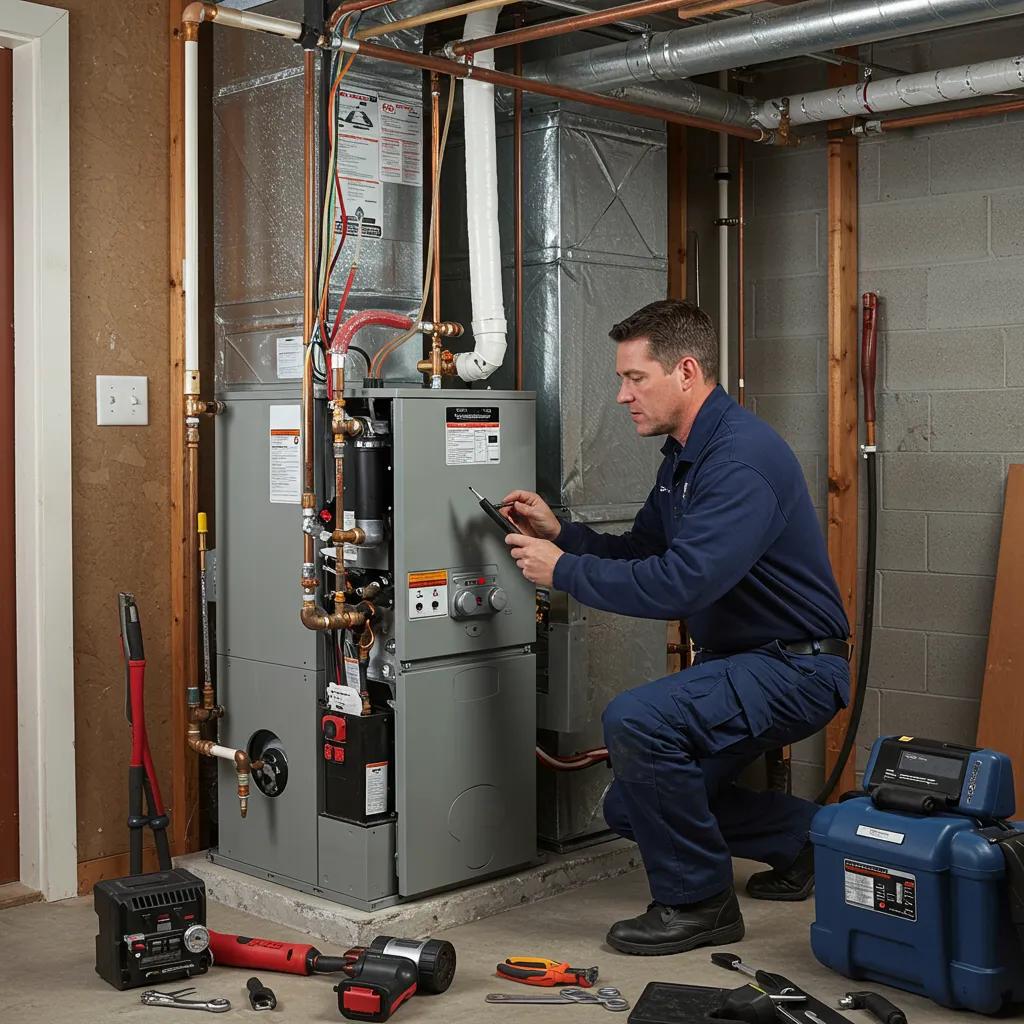
Price differences arise from both the physical product and the work required to install it. Equipment choices range from basic electric units to high-efficiency gas furnaces with advanced controls; higher AFUE ratings and brand reputation generally increase upfront equipment cost but can reduce operating expenses over time. Installation complexity is the next major variable—tasks such as resizing or sealing ductwork, modifying venting, or navigating tight utility closets add labor hours and sometimes subcontracted trades. Local labor rates and permit costs in New Castle County also influence estimates, and contractors will include disposal of the old unit and required safety checks as line items. Knowing these drivers helps homeowners request accurate, apples-to-apples written quotes and anticipate where financing may be applied.
What Is the Average Furnace Replacement Cost in New Castle County?
Average furnace replacement costs reflect a range rather than a single figure because home size, furnace capacity, and installation complexity vary widely. A basic replacement with minimal duct or vent work typically sits at the lower end of local ranges, mid-range projects include moderate duct sealing or thermostat upgrades, and large jobs with extensive ductwork or multi-zone installations push totals higher. Add-ons such as air cleaners, new thermostats, or upgraded venting increase both the immediate cost and the value of financing arrangements that spread payment over time. When evaluating quotes, compare the median range for your furnace type and ask providers to itemize material, labor, permit, and disposal fees to understand variance between low, median, and high examples.
Before the table below, this table gives transparent cost ranges by furnace type and brief notes on installation complexity.
What Flexible Financing Options Are Available for Furnace Installation in New Castle County?

Homeowners in New Castle County can typically choose among several financing pathways: retailer or contractor-arranged credit lines, bank loans or HELOCs, and local/state programs or rebates that reduce the financed amount. Each path balances APR, term length, and application steps differently, so comparing all three categories helps determine which keeps monthly costs affordable and fits credit profiles. Below is a practical comparison of common financing categories and a short checklist of what to evaluate when choosing between them.
Common financing categories for furnace projects include:
- Retailer/Contractor Financing: Offers promotional periods or credit cards tied to home-service retailers and contractors.
- Bank Loans and HELOCs: Secured or unsecured bank products that may offer lower rates for qualified borrowers.
- Local/State Programs: Rebates, low-interest loans, or incentives from energy programs that reduce net financed amounts.
How Do Synchrony Financial and Wells Fargo Financing Plans Compare?
Two common lender types for home equipment financing are specialty retailer cards/financing and traditional bank installment loans, exemplified here by Synchrony-style retailer programs and Wells Fargo-style bank loans.
At Enhanced, we offer financing through Synchrony Financial. You can find the steps to apply on this page to see if you can get your new furnace installation financed for your home.
Retailer financing often provides promotional deferred-interest periods or short 0% terms but can have higher post-promo APRs and stricter on-time payment conditions; approval may be quicker but credit requirements vary. Bank loans typically involve a standard installment loan or HELOC with a clear APR and longer documentation, often offering lower long-term interest for borrowers with strong credit. For homeowners weighing options, check the promotional duration, deferred-interest clauses, and the effective APR after any fees to compare true cost and monthly payment projections.
Below is a concise comparison table with example payments for a $5,000 financed amount to illustrate monthly differences.
What Local Financing Programs Like Energize Delaware Offer for Furnace Installation?
Local programs such as Energize Delaware typically provide incentives, rebates, or low-interest financing aimed at improving home energy efficiency, which can reduce the net amount homeowners need to finance. Program types often include point-of-sale rebates, income-based grants, or partnered low-interest loan products; eligibility rules and available funding change over time, so checking current program details is essential. These incentives commonly stack with contractor discounts or manufacturer rebates, meaning the financed principal can be significantly smaller when incentives are applied. When you receive quotes, ask contractors whether they assist with program applications or can apply rebates at the time of sale to lower your financed amount and monthly payments.
To evaluate local programs, prepare documentation such as household income information and recent energy bills, then compare net financed principal after incentives to see the real impact on long-term costs and payback periods.
How Can I Get a Free Furnace Installation Quote in New Castle County?
Requesting a free furnace installation quote usually follows a clear, short process: initial contact (phone or online), a site survey or virtual assessment, a written estimate with options, and a discussion of financing or incentives. Contractors who offer free quotes typically include an on-site evaluation of your existing furnace, ductwork, and attic or basement access, and they itemize recommended equipment and installation tasks so you can compare proposals accurately. Preparing key information before the visit—furnace age, current model number, recent repair history, and home square footage—speeds the process and improves estimate accuracy. Below is a step-by-step process you can follow and a checklist of items to have ready.
What Is the Process to Request a Furnace Installation Quote?
When you request a quote, expect an initial intake call or form that gathers basic home details and HVAC history; this precedes a scheduled site visit where a technician inspects the furnace, measures rooms and ductwork, and checks venting and safety clearances. The on-site assessment often takes 30–90 minutes depending on complexity and results in a written estimate delivered within a few days that lists equipment options, installation tasks, permit fees, and warranty or service-plan choices. To speed accurate quoting, provide model numbers of your current system, the age of the furnace, and the square footage of heated space. Knowing these details allows contractors to size the new furnace properly and present financing-ready options that include promotional offers or program incentives.
Which Local HVAC Companies Provide Free Quotes with Financing Options?
Many licensed local HVAC contractors in New Castle County offer free, no-obligation quotes and either arrange contractor-promoted payment plans or partner with financing providers to offer flexible payment options; when evaluating these companies, look for contractors who clearly disclose partner lenders and provide written financing disclosures. During the quote call, ask whether the contractor handles incentive applications, whether financing is performed through a third-party lender, and whether promotional terms (like deferred interest) are available; request to see sample financing disclosures and repayment examples. Verify licensing and reviews, and prefer contractors who itemize equipment, labor, permits, and incentives in writing so you can compare net financed amounts across bids.
After comparing providers, choose the written quote that balances transparent pricing, realistic timelines, and clear financing terms to avoid surprises during installation.
When Should You Replace Your Furnace in New Castle County?
Deciding between repair and replacement depends on age, repair frequency, rising energy bills, comfort problems, and any safety concerns; typically, furnaces older than 15–20 years, costing frequent repairs, or showing declining efficiency warrant replacement consideration. Replacement not only restores reliable heat but often improves comfort through better temperature consistency, reduces fuel consumption with higher AFUE units, and can pair with incentives that lower financed amounts. Evaluate the cost of continued repairs versus the expected operating savings of a new high-efficiency furnace to determine the financial case for replacement. The next subsection lists clear signs to help you decide when replacement is the more economical and safe option.
Here are five clear signs that replacement is likely the right choice:
- Age over 15–20 years: Older furnaces generally run at lower AFUE and are less reliable.
- Rising heating bills without usage change: Efficiency loss often shows up as higher energy costs.
- Frequent or costly repairs: Multiple repairs in a short span indicate component wear.
- Uneven heating or comfort issues: Persistent hot and cold spots suggest system inadequacy.
- Safety concerns or irregular combustion: Any suspicion of carbon-monoxide or combustion faults requires immediate attention.
What Are the Signs Your Heating System Needs Replacement?
The most actionable signals include age, escalating repair expenses, and declining performance metrics; a furnace consistently requiring parts or labor often costs more over time than a planned replacement with financing. Efficiency decline appears as higher fuel bills for the same indoor temperature, while comfort issues such as uneven heat or noisy operation suggest duct or equipment inadequacy that replacement can solve. Safety indicators—strange odors, yellow pilot lights, or frequent cycling—must be evaluated promptly because they can indicate combustion or ventilation problems. Assess these signs collectively and request a written replacement estimate if two or more indicators are present to compare repair versus replace economics.
How Does Furnace Replacement Improve Home Comfort and Energy Efficiency?
Replacing an old furnace with a high-AFUE unit typically increases thermal consistency, reduces runtime, and lowers annual fuel consumption; these benefits translate into measurable annual savings that help offset financed costs. High-efficiency models can improve airflow balance and support zoning systems or modern thermostats that further enhance comfort and lower operating costs. Example calculations commonly show a newer high-efficiency system reducing fuel use by a meaningful percentage compared with aging equipment, depending on climate and usage patterns. Financing serves to spread the upfront investment while incentives and lower operating costs compress the payback period, making replacement financially attractive for many homeowners.
How Do Energy-Efficient Furnaces Save Money with Financing in New Castle County?
Energy-efficient furnaces save money by reducing annual fuel consumption, lowering monthly utility bills, and often qualifying for rebates or tax incentives that reduce the financed principal; when financing is structured correctly, monthly payments can be similar to or less than previous heating bills while delivering a newer, more reliable system. The mechanism is straightforward: higher AFUE ratings convert a greater share of fuel into heat, and reduced run-time extends equipment life and lowers maintenance costs. Combining financing, manufacturer rebates, and local programs increases the likelihood that the net monthly cost becomes cash-flow positive relative to prior operating costs. The table below shows how different upgrade levels translate into estimated savings and financing impacts.
What Are the Benefits of Installing an Energy-Efficient Furnace?
Energy-efficient furnaces deliver lower fuel bills, more consistent home comfort, and reduced emissions, which together improve household budgets and environmental impact. Improved AFUE converts more fuel into usable heat, reducing run time and wear on components while also reducing the frequency of repairs and maintenance costs. Many energy-efficient models qualify for manufacturer rebates or local incentives that lower the net purchase price, and these savings compound when paired with utility bill reductions. Taken together, these benefits make energy-efficient replacement a compelling financial and comfort-focused choice for homeowners contemplating financing.
How Can Financing Help Offset the Cost of Energy-Efficient Upgrades?
Financing spreads the upfront cost of a high-efficiency furnace over a multi-year term so homeowners can realize immediate utility savings while paying monthly rather than facing a large lump sum. When rebates, tax incentives, or locally administered programs reduce the financed principal, the monthly payment requirement often drops to a level comparable to or lower than prior energy bills, producing near-term net savings. Example math shows that a financed monthly payment combined with a 10–15% reduction in annual fuel costs can result in positive cash flow for homeowners. Selecting the right term and APR is critical—shorter terms raise monthly payments but lower total interest, while longer terms reduce monthly payments but extend the interest cost.
What Are Common Questions About Furnace Installation and Financing in New Castle County?
Homeowners frequently ask about promotional 0% financing, bad-credit options, expected timelines, and warranty coverage; concise answers help set realistic expectations before requesting quotes. Understanding the typical availability and conditions of 0% offers, practical paths for homeowners with poor credit, and the standard timeline from quote to installation helps you plan and select a contractor who offers transparent financing options. Clear, short Q&A below provides direct guidance and next steps you can use when speaking with contractors or lenders. The final two subsections answer two of the most-searched questions to guide immediate decisions.
Here are common questions homeowners ask along with short answers and actionable follow-ups:
- Can I get 0% financing for a new furnace? Yes, promotional 0% offers are sometimes available but often include strict on-time payment requirements and deferred-interest clauses, so read disclosures carefully.
- Are there bad-credit financing options? Options exist through subprime lenders, credit unions, or contractor-arranged programs, but expect higher rates or shorter promo terms; consider local assistance programs as alternatives.
- How long does the installation process take? From site visit to completed installation typically ranges from one to four weeks depending on scheduling, permitting, and job complexity.
Can I Get 0% Financing for a New Furnace in New Castle County?
Promotional 0% financing is sometimes offered by retailer or contractor-affiliated programs for limited promotional periods, but these offers usually require on-time payments and may convert to high APRs if the promotion is not met. Read the financing disclosure for deferred-interest traps and confirm whether the promotion applies to your financed principal after any rebates or trade-in credits. Ask contractors to show sample monthly payments after incentives so you can compare net cost and the risk associated with promo conditions. When in doubt, prefer simple fixed-rate installment loans with clear APRs to understand total cost.
Are There Bad Credit Financing Options for Furnace Installation?
Homeowners with poor credit can sometimes access financing through specialized subprime lenders, secured loans such as HELOCs if they qualify, or local assistance programs that target low-income households; these options typically come with higher rates or stricter terms. To improve approval odds, consider providing a co-signer, using home equity as collateral, or applying through a credit union that offers more flexible underwriting. Also explore grants or income-based programs which may reduce the financed principal or provide direct replacement assistance to eligible households. Evaluate the trade-offs carefully and prioritize transparent, written financing disclosures to avoid unexpected costs.