
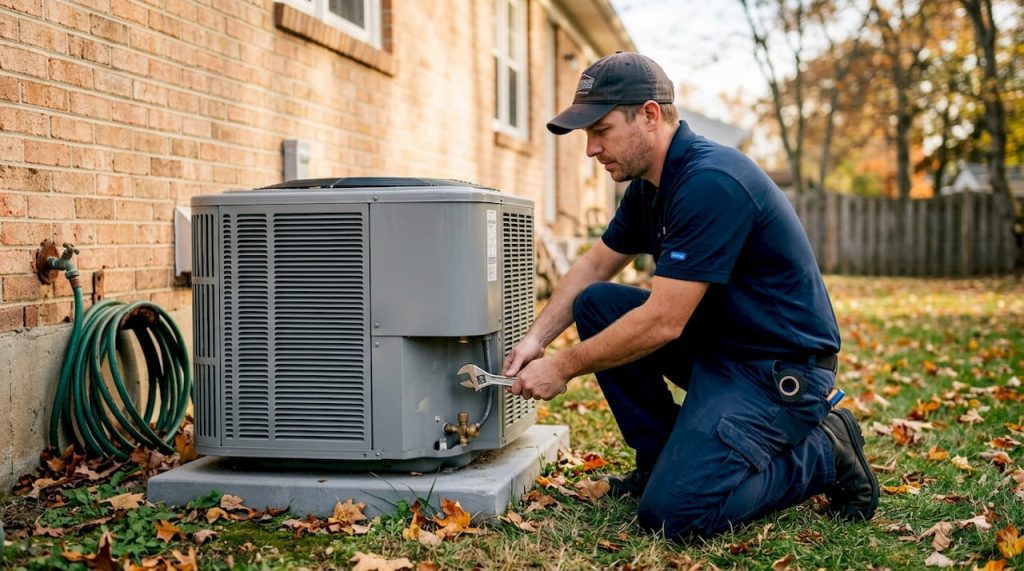
Most homeowners assume their HVAC system will run for a set number of years and then simply stop. The reality is more nuanced. Central AC lasts 15 years on average, but real-world outcomes in Newark, DE can swing well above or below that number depending on how the system is treated and where it operates. Newark’s humid summers, cold winters, and seasonal temperature swings put unique stress on heating and cooling equipment. This guide breaks down what actually drives HVAC longevity, what the numbers look like for our local climate, and what you can do right now to protect your investment.
Table of Contents
- What does HVAC longevity mean?
- Typical HVAC lifespans: Data and what they mean for Newark, DE
- Factors that influence HVAC system longevity
- How to maximize your HVAC system’s lifespan
- A local expert’s take: Realistic expectations for Newark, DE HVAC systems
- Get more from your system with local HVAC expertise
- Frequently asked questions
Key Takeaways
| Point | Details |
|---|---|
| HVAC lifespan varies | The average life of HVAC systems depends on type, usage, and local climate. |
| Maintenance matters most | Routine care and prompt service calls greatly extend your HVAC’s service life. |
| Newark, DE climate impact | Local weather means AC and furnace longevity is shaped by regular maintenance more than most homeowners realize. |
| Plan replacements wisely | Watch for declining performance after 12-15 years and budget for replacement to avoid emergency breakdowns. |
What does HVAC longevity mean?
When HVAC professionals talk about longevity, they mean the typical useful service life of a system before a major replacement becomes necessary. It is not just about whether the unit still turns on. It is about whether the system runs efficiently, keeps your home comfortable, and does not cost more to maintain than it would to replace.
The term covers every major piece of climate control equipment in your home. That includes central air conditioning, heat pumps, gas furnaces, and boilers. Each of these has a different expected lifespan, and understanding how HVAC systems work helps explain why those numbers vary so much.
Here is why longevity matters to you as a homeowner:
- System reliability: An aging system is more likely to break down during the hottest week of July or the coldest night in January.
- Investment value: HVAC equipment is one of the most expensive systems in your home. Knowing its lifespan helps you plan financially.
- Upgrade timing: Replacing a system proactively, before it fails completely, often saves money on emergency service and allows you to choose the best replacement option.
- Resale value: Buyers notice HVAC age. A newer or well-maintained system is a selling point.
National data from DOE and AHRI gives us solid starting benchmarks. DOE and AHRI report 15 years for central AC, 14 years for heat pumps, 18 years for gas furnaces, and up to 25 years for boilers under standard conditions.
“Field-experienced lifespans often run 10 to 15 years for AC and heat pumps, compared to the modeled 15 to 21 years. The gap comes down to maintenance habits, installation quality, and local climate stress.”
That gap between the model and the field is where most homeowners get surprised. A system that looks fine on paper can underperform significantly if it was installed poorly, skipped maintenance, or ran in a demanding climate without proper upkeep.
Typical HVAC lifespans: Data and what they mean for Newark, DE
National averages give you a baseline, but Newark, DE has its own climate personality. The region sits in a humid continental zone, which means hot, humid summers and cold winters with real freeze events. That combination puts more annual stress on HVAC equipment than a milder climate would.
Here is how national medians compare to what homeowners in Newark, DE typically experience:
| System type | DOE/AHRI national median | Field-experienced average | Newark, DE local estimate |
|---|---|---|---|
| Central AC | 15 years | 12 to 15 years | 15 to 20 years with good care |
| Heat pump | 14 years | 10 to 14 years | 12 to 16 years |
| Gas furnace | 18 years | 15 to 18 years | 15 to 30 years with maintenance |
| Boiler | 25 years | 20 to 25 years | Up to 25 years |
According to local Newark, DE data, central AC typically lasts 15 to 20 years and furnaces can reach 15 to 30 years when properly maintained. That upper range for furnaces is not a typo. A well-installed gas furnace that receives annual service and prompt repairs can genuinely last three decades in this region.
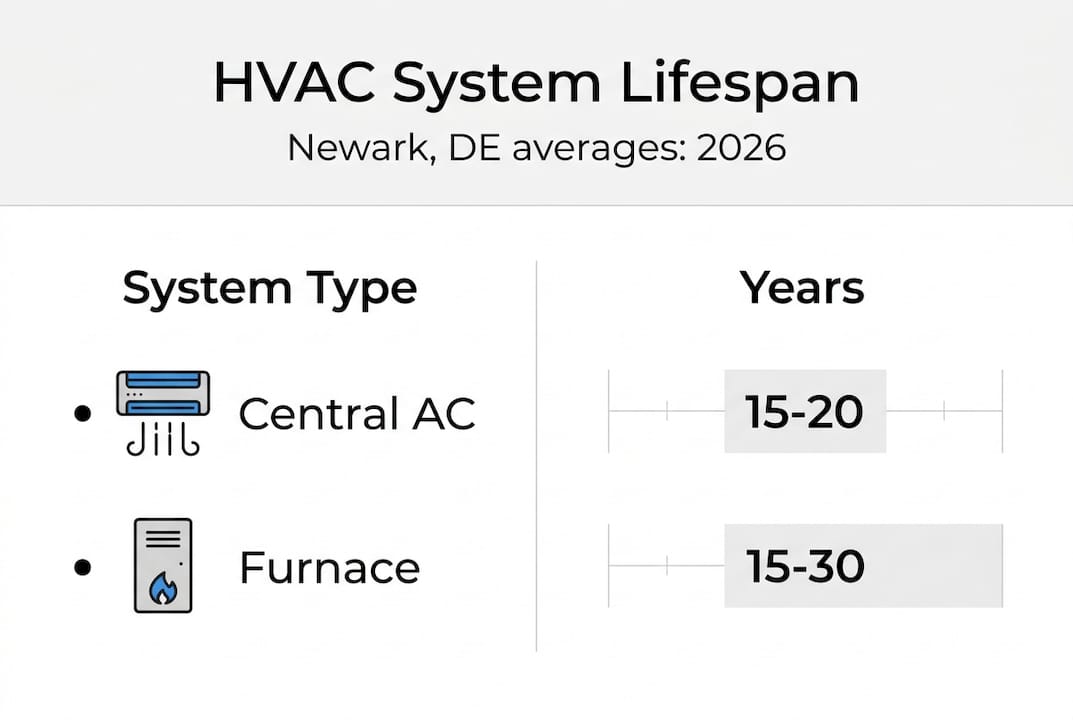
Key stat: Boilers consistently outlast every other residential HVAC system, often reaching 24 to 25 years of reliable service.
What does this mean for your budget? If you are planning HVAC services costs in Newark, knowing your system’s age relative to these ranges helps you decide whether to repair or replace. A 12-year-old AC that needs a $900 repair is a different conversation than the same repair on a 6-year-old unit. When choosing heating and cooling services, understanding these timelines helps you ask the right questions and avoid being caught off guard.
Factors that influence HVAC system longevity
The standard numbers are a starting point, but several real-world variables will push your system toward the high or low end of its expected range.
The four biggest factors are:
- Local climate: Newark’s humidity and seasonal cycling mean your AC and furnace both work harder than they would in a milder region. More run hours per year equals faster wear.
- Maintenance regularity: This is the single most controllable factor. Systems that get annual tune-ups consistently outlast those that only see a technician when something breaks.
- Installation quality: A system that was sized incorrectly or installed with shortcuts will struggle from day one. Poor installation is a leading cause of early failure.
- Daily usage patterns: Running your system at extreme temperature settings, or leaving it running 24 hours without a programmable schedule, shortens its life faster than moderate, consistent use.
Beyond those four, other variables also matter:
- Brand and model quality
- Home insulation levels (a poorly insulated home forces the system to work overtime)
- How often you change air filters
- Thermostat settings and smart control use
In Newark’s humid continental climate, proper upkeep can extend AC and furnace service life by several meaningful years. That is not a minor benefit. A few extra years on a $5,000 to $10,000 system is real money. Staying current with HVAC maintenance frequency and following forced air heater maintenance tips are two straightforward ways to stay ahead of problems.
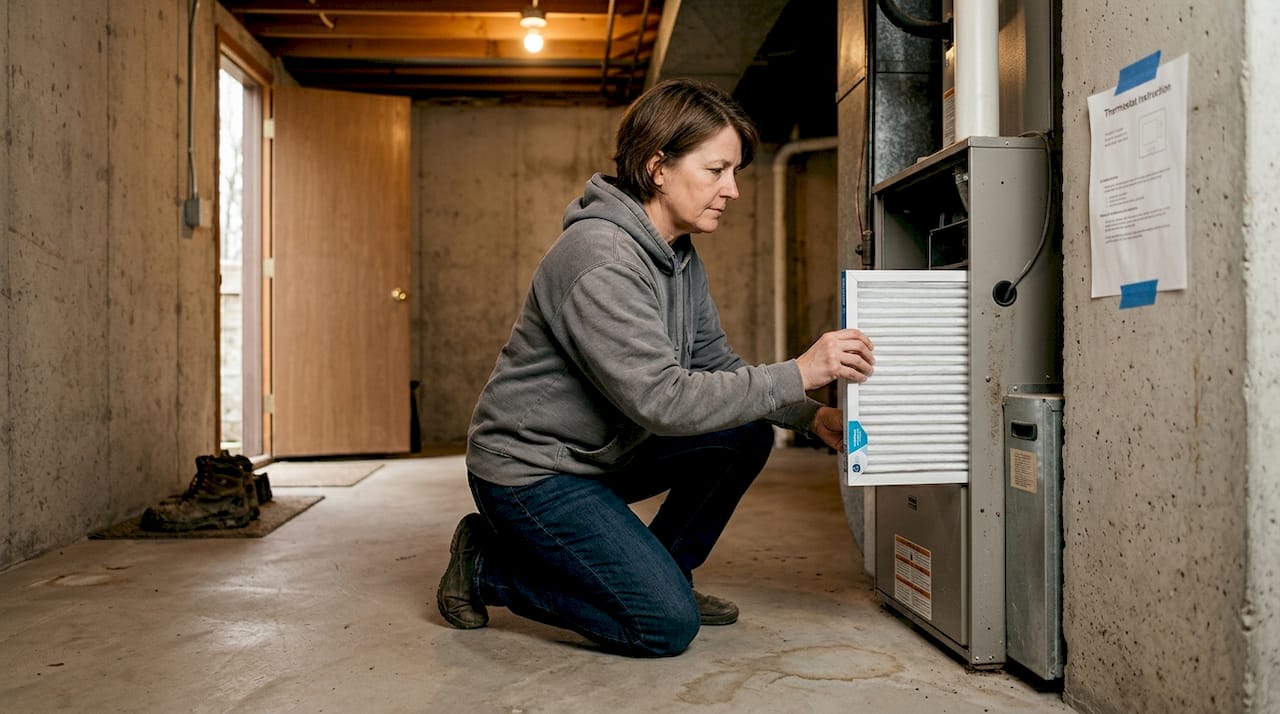
Pro Tip: Keep a simple log of every service visit, filter change, and repair. This documentation can strengthen your warranty claims, help a technician diagnose issues faster, and even boost your home’s resale value.
How to maximize your HVAC system’s lifespan
Knowing what affects longevity is useful. Knowing exactly what to do about it is better. Here are the proven habits that push systems toward the upper end of their expected service life.
Step-by-step seasonal maintenance routine:
- Change air filters every 1 to 3 months. Clogged filters force the system to work harder and restrict airflow, which strains the blower motor and heat exchanger.
- Schedule a professional tune-up each spring and fall. Spring service preps the AC for summer demand. Fall service gets the furnace ready before the first cold snap.
- Clear debris around outdoor units. Leaves, grass clippings, and dirt reduce airflow and cause the compressor to overheat.
- Check and seal duct leaks. Leaky ducts can reduce system efficiency by 20 to 30 percent, forcing longer run cycles.
- Test your thermostat and controls. A faulty thermostat can cause short cycling, which is when the system turns on and off too frequently, wearing out components faster.
- Listen and observe. Unusual noises, uneven temperatures, or a spike in your energy bill are early warning signs worth investigating before they become major failures.
Routine scheduled maintenance and consistent filter attention are proven methods for reaching the upper end of a system’s service life expectancy.
Here is what that investment looks like in practical terms:
| Maintenance action | Estimated annual cost | Estimated life extension | Estimated savings |
|---|---|---|---|
| Filter changes (DIY) | $40 to $80 | 1 to 2 years | $200 to $500 in repairs |
| Annual professional tune-up | $100 to $200 | 2 to 5 years | $500 to $1,500 in repairs |
| Duct sealing (one-time) | $300 to $600 | 1 to 3 years | 20 to 30% energy savings |
You can schedule a spring HVAC tune-up to get ahead of the summer heat, and pairing that with a residential HVAC maintenance plan makes the process automatic rather than reactive.
Pro Tip: Partnering with a trusted local HVAC company for a seasonal maintenance plan removes the guesswork. You get reminders, priority scheduling, and a technician who already knows your system’s history.
A local expert’s take: Realistic expectations for Newark, DE HVAC systems
Here is something the averages do not tell you: the homeowners we see with 20-plus-year-old AC units are not lucky. They are consistent. They changed filters, called for service before things broke, and paid attention to early warning signs. The ones calling us for emergency replacements in August often have systems that are only 10 or 12 years old but were never serviced.
The “15-year rule” is a starting point, not a verdict. Newark’s pollen seasons, summer humidity, and back-and-forth temperature swings in spring and fall do accelerate wear. But that just means the maintenance habits matter more here, not less.
Our honest recommendation: start planning for a major service evaluation or potential replacement once your system crosses the 12-year mark. That does not mean panic. It means getting a professional assessment so you are not making a $10,000 decision under pressure during a heatwave. Reviewing HVAC costs in Newark ahead of time puts you in a much stronger position when the time comes.
Most system failures we see are preventable. They come from skipped tune-ups, ignored filter changes, or warning signs that went unaddressed for a season too long.
Get more from your system with local HVAC expertise
You now have a clear picture of what drives HVAC longevity and what you can do to protect your system here in Newark, DE. The next step is putting that knowledge into action with the right support.
At Enhanced Heating & Air Conditioning, we specialize in helping Newark homeowners get the most from their heating and cooling investments. Whether you need HVAC repair services near you, want to set up regular HVAC maintenance, or are ready to talk about a replacement, our team is here to help. Do not wait for a breakdown to take action. Reach out to the skilled Newark, DE HVAC pros at Enhanced Heating & Air Conditioning for a free consultation and honest advice tailored to your home.
Frequently asked questions
How can I tell if my HVAC system is near the end of its life?
Common signs include frequent repairs, rising energy bills, inconsistent temperatures throughout your home, and a system age that is approaching or past local averages. HVAC systems over 15 years typically require more frequent and costly repairs.
What is the average lifespan of an HVAC system in Newark, DE?
Local sources confirm that central AC typically lasts 15 to 20 years and gas furnaces can last 15 to 30 years in Newark, DE, with proper maintenance playing a major role in reaching those upper ranges.
Does regular maintenance really extend HVAC lifespan?
Yes, and the difference is significant. Regular maintenance is proven to extend HVAC service life by several years while also reducing the frequency and cost of repairs.
Which HVAC system lasts the longest?
Boilers generally outlast all other residential HVAC systems. Boilers last up to 24 to 25 years according to DOE and AHRI data, making them the longest-lived option for home heating.

Joe Brooks is the owner of Enhanced Heating & Air Conditioning and has more than 23 years of experience serving homeowners and businesses in and around Newark Delaware. Over the past two decades, Joe has built Enhanced Heating & Air Conditioning by helping customers with heating, air conditioning, indoor air quality, HVAC maintenance, and system installation needs. His articles draw on years of hands-on industry experience and the real questions Enhanced customers ask about keeping their homes comfortable, efficient, and reliable. Joe and the Enhanced team serve Newark and communities throughout New Castle County and the surrounding Delaware area.