
Your HVAC system quietly runs in the background every single day, and most homeowners never think about it until something breaks. But this system does far more than flip between hot and cold air. It controls humidity, filters out pollutants, manages airflow, and directly shapes your monthly energy bill. Ignore it, and you pay for it, literally. Studies show that poorly maintained or mismatched systems can spike household energy costs by 30% or more. This guide cuts through the confusion so Newark, DE homeowners can make smarter decisions about their heating, cooling, and ventilation without needing an engineering degree.
Table of Contents
- What does HVAC mean and how does it work?
- Types of HVAC systems for Newark, DE homes
- Why proper HVAC sizing and installation matter
- Maintenance and energy efficiency for your HVAC system
- The real reason HVAC matters more than you think
- Get expert HVAC guidance for your Newark home
- Frequently asked questions
Key Takeaways
| Point | Details |
|---|---|
| HVAC means more than heating | It includes controlling air quality, comfort, and energy costs in your home. |
| System selection matters | Matching the right system type to Newark’s climate can save you money and boost comfort. |
| Professional installation is key | Accurate sizing and expert installation prevent common issues and wasted money. |
| Regular maintenance pays off | Simple steps like changing filters and yearly service visits keep your HVAC efficient and reliable. |
| Good ventilation protects health | Modern HVAC systems help prevent poor indoor air quality and health problems. |
What does HVAC mean and how does it work?
Now that you know why HVAC matters, let’s break down exactly what it means and how it operates in your home. HVAC stands for Heating, Ventilation, and Air Conditioning, a system that regulates temperature, humidity, and air quality in homes using principles of thermodynamics, fluid mechanics, and heat transfer. That sounds technical, but the everyday reality is simpler than it seems.
Think of your HVAC system as a team of specialists, each handling a different job:
- Heating unit (furnace, boiler, or heat pump): Generates and distributes warmth throughout your home.
- Air conditioner: Removes heat and humidity from indoor air, sending cooled air back through your rooms.
- Ductwork: The network of channels that carries conditioned air from the unit to every room.
- Thermostat: The control center that tells the system when to turn on, turn off, and what temperature to hold.
- Ventilation components: Fans, filters, and air exchangers that keep fresh air moving and contaminants out.
All of these parts work together. The air handler pulls in return air, heats or cools it depending on the season, filters it, and pushes it back through your ducts. The thermostat monitors the temperature and tells the system when to cycle on or off.
Why ventilation is non-negotiable: Without proper ventilation, indoor air quickly becomes a trap for moisture, carbon dioxide, mold spores, and airborne chemicals from cleaning products or furniture. This creates what experts call sick building syndrome, a condition where poor air quality causes recurring headaches, fatigue, and respiratory symptoms. Good ventilation dilutes and removes these contaminants continuously.
Pro Tip: Bigger is not always better. A system that’s too powerful for your home will short cycle, meaning it turns on and off too quickly to properly dehumidify or evenly heat your space. Balance between capacity and your home’s actual needs is what drives real comfort. You can learn more about how HVAC zoning basics play into that balance.
Types of HVAC systems for Newark, DE homes
Understanding the basic pieces is just the start. Next, see which HVAC system types fit Newark’s homes and climate.
Newark sits in a mixed climate zone. Winters are relatively mild, typically ranging from 25 to 35 degrees Fahrenheit, with warm, humid summers. That combination shapes which systems perform best here. As detailed in heat pumps vs traditional HVAC comparisons for Delaware, heat pumps work efficiently in mild winters without needing a backup heat source as often, ductless mini-splits are ideal for homes without existing ductwork, and geothermal systems offer maximum efficiency but carry a much higher upfront cost.

| System type | Pros | Cons | Best for |
|---|---|---|---|
| Central air + furnace | Reliable, familiar, widely serviced | Requires ductwork, can be less efficient | Larger homes with existing ducts |
| Heat pump | Heats and cools, very efficient in mild climates | Less effective below 15F without backup | Most Newark homes |
| Ductless mini-split | No duct loss, zone control, easy retrofit | Higher per-unit cost, visible wall units | Older homes, additions, condos |
| Geothermal | Extremely efficient, low operating cost | Very high installation cost, invasive install | Homeowners focused on long-term savings |
When choosing, also consider your home’s age and layout. Pairing your system choice with energy-saving HVAC strategies and smart thermostat optimization can dramatically increase efficiency regardless of which system you pick.
Key considerations by home type:
- Older homes (pre-1980): Often lack ductwork or have leaky ducts, making mini-splits or a hybrid heat pump setup a smart fit.
- Newer homes: Typically duct-ready, so central systems or heat pumps integrate cleanly.
- Homes with add-on rooms or finished basements: Zone-based systems like mini-splits give targeted comfort without overloading the main system.
- Smaller condos or townhouses: Mini-splits offer flexibility and avoid the cost of a full central system.
Why proper HVAC sizing and installation matter
Choosing your system is only half the battle. Next, make sure it’s the right size and installed correctly.
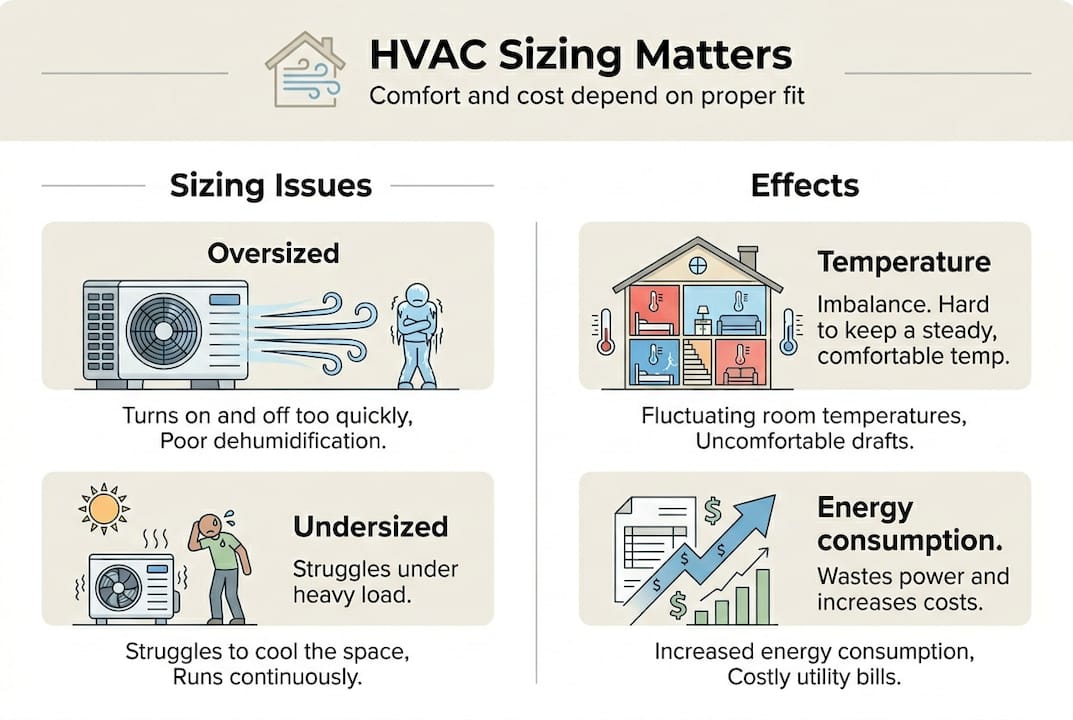
Improper sizing leads to inefficiency, which plays out in your comfort every single day. An oversized unit blasts air quickly, then shuts off before removing enough humidity. An undersized unit runs constantly, driving up your energy bill without ever quite reaching your target temperature. Neither is acceptable.
| Sizing issue | Effect on comfort | Effect on costs |
|---|---|---|
| Oversized system | Uneven temps, high humidity, short cycles | Wasted energy, more wear on parts |
| Undersized system | Never reaches set temp, hot/cold spots | Constantly running, very high bills |
| Correctly sized | Even temps, proper humidity control | Efficient operation, lower bills |
Pro Tip: Before any installation, ask your contractor for a Manual J load calculation. This is an industry-standard assessment that accounts for your home’s square footage, insulation quality, window placement, and local climate data. Without it, sizing is just guesswork, and guesswork costs you money for years. More detail on proper HVAC sizing can help you understand what to expect.
Here’s what a professional installation process typically looks like:
- Initial assessment: Technician measures your home and gathers data for load calculations.
- System selection: Equipment is chosen based on your specific square footage, insulation, and local climate.
- Site preparation: Existing ductwork is inspected or installation areas are cleared and prepped.
- Equipment installation: Units, ductwork connections, and electrical work are completed to code.
- System testing: The team runs the system through heating and cooling cycles, checking airflow and refrigerant levels.
- Homeowner walkthrough: You learn how to operate the thermostat, change filters, and spot early warning signs.
Maintenance and energy efficiency for your HVAC system
With your system properly sized and installed, ongoing care is key. Here’s how to keep it running efficiently.
Poor maintenance causes short cycling and high bills, two problems that compound quickly if left unchecked. A neglected system also circulates dust, allergens, and mold spores through your home, which affects your family’s health far more than most people realize. Staying ahead of maintenance is far cheaper than reacting to breakdowns.
What you can handle yourself vs. when to call a pro:
- DIY monthly: Inspect the air filter, check vents for blockages, listen for unusual noises.
- DIY seasonally: Clear debris from outdoor units, check thermostat accuracy, look for moisture around the air handler.
- Call a pro annually: Full system inspection, refrigerant check, coil cleaning, blower motor lubrication, duct inspection.
- Call a pro immediately if you notice warning signs like sudden spikes in your energy bill, strange smells, or the system failing to reach your set temperature.
Scheduling regular HVAC service maintenance each year extends system life, protects your warranty, and keeps efficiency high. Well-maintained heat pumps can save a Newark homeowner up to $500 per year compared to traditional systems running under the same conditions.
Pro Tip: Check your air filter once a month and replace it at minimum every three months. In pet-friendly homes or during heavy use seasons, replace it monthly. A clogged filter forces your system to work harder, which raises your bill and shortens equipment life. You can also avoid common heating mistakes that quietly drive up costs season after season. For homeowners with heat pumps, dedicated heat pump maintenance tips are worth bookmarking.
The real reason HVAC matters more than you think
Let’s step back for a moment and consider why this topic matters far beyond the thermostat.
Most homeowners frame HVAC as a comfort tool, which is fair but incomplete. Here’s the part people miss: your HVAC system is one of the most significant determinants of indoor air quality, and ventilation prevents sick building syndrome by continuously removing contaminants that accumulate from everyday activities like cooking, cleaning, and even just breathing.
We’ve seen homeowners spend years dealing with unexplained allergies, fatigue, and respiratory issues that cleared up within weeks of fixing a poorly ventilated or dirty HVAC system. That’s not a coincidence. The air inside your home can be two to five times more polluted than outdoor air when ventilation is inadequate.
The other misconception is that saving money means buying the cheapest system. In reality, the lowest upfront cost almost always means higher operating costs over time. A well-sized, properly installed, and regularly maintained system pays for itself through lower energy bills and fewer emergency repairs. The math is not complicated, but it requires looking past the price tag on installation day. Explore more perspectives like this on the Enhanced Heating & Air blog for ongoing guidance.
Get expert HVAC guidance for your Newark home
If your home could benefit from HVAC expertise, here’s how to get trusted help locally.
Navigating system types, sizing, and maintenance on your own is overwhelming. That’s where having a local expert makes all the difference. Enhanced Heating & Air Conditioning works exclusively in the Newark, DE area, which means we understand the local climate, housing stock, and what actually works here.
Whether you’re replacing an aging system, upgrading for efficiency, or just want a second opinion, explore our full range of HVAC services in Newark to find the right fit for your home. It helps to know questions for your HVAC contractor before any appointment. And if you’re thinking about a new install, reviewing HVAC installation advice on location and setup can save you from costly mistakes before work even begins.
Frequently asked questions
What are the main parts of a home HVAC system?
A typical system includes a heater (furnace, boiler, or heat pump), an air conditioner, ductwork or mini-split units, a ventilation system, and a thermostat for control. Each part depends on the others to deliver consistent comfort.
How often should Newark, DE homeowners service their HVAC systems?
Schedule professional maintenance at least once per year and change air filters every one to three months. Skipping service is one of the fastest ways to trigger short cycling and high bills.
What type of HVAC system is most efficient for Delaware’s climate?
Heat pumps are the top choice for Newark’s mild winters and can save up to $500 per year compared to traditional heating and cooling systems in a standard-sized home.
What happens if my HVAC is the wrong size?
Improper sizing causes inefficiency, leading to short cycling, uneven temperatures, high energy bills, and a shorter overall system lifespan that can cost you thousands in premature replacements.
What is sick building syndrome, and how does HVAC prevent it?
Sick building syndrome refers to symptoms like headaches and fatigue caused by poor indoor air quality. Proper HVAC ventilation removes contaminants continuously, keeping your home’s air clean and your family healthier.

Joe Brooks is the owner of Enhanced Heating & Air Conditioning and has more than 23 years of experience serving homeowners and businesses in and around Newark Delaware. Over the past two decades, Joe has built Enhanced Heating & Air Conditioning by helping customers with heating, air conditioning, indoor air quality, HVAC maintenance, and system installation needs. His articles draw on years of hands-on industry experience and the real questions Enhanced customers ask about keeping their homes comfortable, efficient, and reliable. Joe and the Enhanced team serve Newark and communities throughout New Castle County and the surrounding Delaware area.