
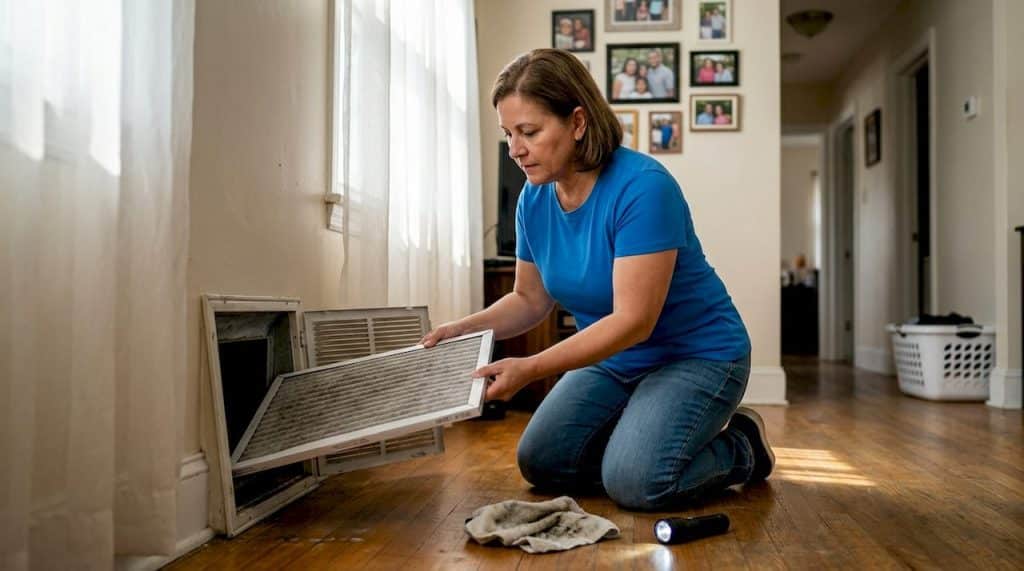
Most Newark homeowners spend real money every month on energy bills without realizing a $10 filter is quietly driving those costs up. A clogged HVAC filter doesn’t just look dirty; it forces your entire heating and cooling system to work harder, wear out faster, and circulate low-quality air through every room in your home. This guide walks you through exactly why regular filter replacement matters, how often to do it based on your specific household, and which filter choices protect both your system and your family’s health.
Table of Contents
- How dirty filters impact your HVAC system
- Air quality benefits for Newark homes
- When and how often to replace HVAC filters
- Choosing the right filter for your system
- What most homeowners miss about filter changes
- Get professional HVAC support in Newark, DE
- Frequently asked questions
Key Takeaways
| Point | Details |
|---|---|
| Energy savings | Replacing HVAC filters can improve efficiency and lower your energy bills by up to 15 percent. |
| Air quality boost | Clean filters trap dust and allergens, helping keep Newark homes healthier and more comfortable. |
| Prevents expensive repairs | Regular filter changes protect your HVAC system from breakdowns and costly fixes. |
| Easy maintenance routine | Checking monthly and changing filters on schedule is simple with practical reminders and tips. |
| Filter choice matters | Pick the right filter for your system and household needs for best results and efficiency. |
How dirty filters impact your HVAC system
Your HVAC system is built to move air in a continuous loop. When a filter gets clogged with dust, pet hair, and debris, that loop slows down. Your blower motor has to work harder just to pull the same amount of air, and that extra effort shows up directly on your energy bill.
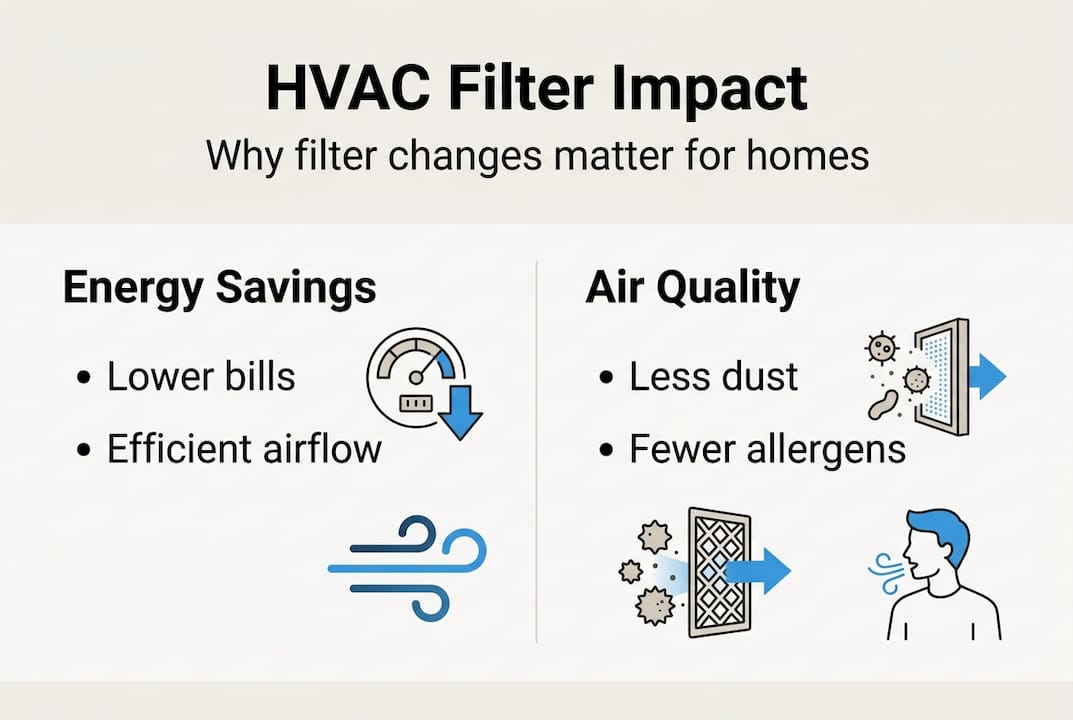
Regular filter replacement improves energy efficiency by 5 to 15%, because dirty filters restrict airflow and force the system to work harder. That might not sound dramatic, but on a Newark winter utility bill that runs $200 or more, 15% savings adds up to real money over a heating season.
The financial damage goes beyond monthly bills. Restricted airflow from dirty filters causes serious system strain, leading to short cycling, frozen coils, overheating, and premature wear on the blower motor and compressor, pushing repair costs up to 30% of the system’s total price. A new central air system in Delaware can run $5,000 to $10,000 installed. Thirty percent of that in preventable repairs is a painful number for something you could have avoided with a $15 filter swap.
| Problem caused by dirty filter | Short-term effect | Long-term consequence |
|---|---|---|
| Restricted airflow | Higher energy consumption | 5-15% increase in utility bills |
| Short cycling | Inconsistent temperatures | Compressor wear and failure |
| Frozen evaporator coils | System shutdown | Refrigerant leaks, costly repair |
| Blower motor overload | Loud operation | Motor burnout and replacement |
| Overheating heat exchanger | Safety shutoff activation | Cracked exchanger, CO risk |
These aren’t rare edge cases. We see winter HVAC problems regularly in Newark homes, and the root cause is often traced back to a filter that was left in place six months too long.
Pro Tip: Pull your filter out right now and hold it up to a window or lamp. If you can barely see light through it, your system has been working overtime for weeks and your air quality has been suffering.
The core issue most people miss: HVAC systems are designed with a specific airflow resistance in mind. Every cubic foot of restricted air is a cubic foot your system is fighting for. Over time, that constant strain degrades components in the same way running your car with a clogged air filter would shorten your engine’s life.
Air quality benefits for Newark homes
Newark, Delaware sits in a region with genuinely challenging air quality conditions for homeowners. Delaware’s humid summers create prime conditions for mold spores. Spring and fall bring heavy pollen from trees, grasses, and ragweed. Older neighborhoods have homes with accumulated dust in ductwork that recirculates constantly. Your HVAC filter is the primary barrier between all of that and the air your family breathes indoors.
A clean filter working correctly captures dust mites, pollen, pet dander, mold spores, and fine debris before they cycle back into your living spaces. The rating system that measures this capability is called MERV, which stands for Minimum Efficiency Reporting Value. The scale runs from 1 to 20, with higher numbers capturing smaller particles.
Higher MERV filters in the 8 to 13 range capture finer particles like dust mites and pollen better than lower-rated filters, but they can restrict airflow if the rating is too high for your specific system. The key is matching the filter to your system’s capacity.
| MERV rating | Particles captured | Best for |
|---|---|---|
| 1 to 4 | Large dust, pollen | Basic protection, older systems |
| 5 to 7 | Dust mites, mold spores | Standard residential use |
| 8 to 11 | Pet dander, fine dust, some bacteria | Most Newark homes |
| 12 to 13 | Smoke, fine particles, allergens | Allergy sufferers, homes with pets |
| 14 and above | Bacteria, viruses | Medical environments, not residential |
For most homes in Newark, a MERV 8 to 11 filter hits the right balance. It captures the allergens that matter most without creating the airflow resistance that strains your equipment.
“The biggest mistake homeowners make is buying the highest MERV filter they can find and assuming better filtration always means better performance. A MERV 13 filter in a system designed for MERV 8 is like breathing through a surgical mask while jogging. You can do it, but not for long.”
If someone in your household has asthma, severe allergies, or respiratory sensitivities, upgrading to MERV 11 or 12 is worth the small cost increase. Just confirm your system manual supports it first. You can explore cleaner air for your home strategies that go beyond just filter selection to create a genuinely healthier indoor environment.
Key air quality factors specific to Newark homeowners:
- Spring pollen season in Delaware runs March through May and spikes particle counts dramatically. Consider replacing your filter at the start and end of this window.
- Pet households generate dander continuously. One dog or cat typically moves your replacement schedule from 90 days down to 30 to 45 days.
- Renovation or construction nearby or inside the home fills filters fast. Temporary monthly checks protect your system during these periods.
- Humidity above 60% encourages mold growth in filters, especially fiberglass types. A visibly damp filter should come out immediately regardless of schedule.
When and how often to replace HVAC filters
The standard guidance is to replace filters every one to three months, but that range is too wide to be useful on its own. Your specific household conditions determine where you fall in that window. Filter replacement frequency depends on filter type and home conditions: fiberglass filters need replacement every 30 days, pleated filters every 60 to 90 days, and thicker high-MERV filters can last longer when conditions allow.
Here’s a practical replacement schedule based on common Newark household situations:
- Single-occupant home, no pets, no allergies: Replace a pleated filter every 90 days. Check monthly.
- Two or more adults, light foot traffic: Replace every 60 days. Newark’s seasonal pollen shifts this shorter in spring.
- One pet in the home: Move to a 45-day replacement cycle. Pet dander accumulates faster than most homeowners expect.
- Multiple pets or heavy shedders: Replace every 20 to 30 days. Some breeds generate significant airborne dander year-round.
- Household member with allergies or asthma: Replace every 30 to 45 days, and consider upgrading your MERV rating.
- Active construction or renovation nearby: Check every two weeks and replace when visibly loaded.
The simple light test works well for your monthly check. Remove the filter and hold it up to a window or ceiling light. A clean filter lets light through clearly. A moderately used filter shows gray buildup but still allows some light. A filter that blocks light almost entirely needs to come out now regardless of how long it has been installed.
Knowing when your AC filter needs to be changed is a practical skill every Newark homeowner should build. The signs go beyond visual checks. If your system is running longer cycles to reach the thermostat setting, or if you notice more dust on surfaces than usual, a clogged filter is often the first thing to check.
Pro Tip: Write the installation date directly on the filter frame with a marker when you put it in. Then set a phone calendar reminder for your next planned check. This takes 10 seconds and eliminates the guesswork that leads to filters staying in place for eight months.
Scheduling HVAC service maintenance in Newark, DE twice a year, once before summer cooling season and once before winter heating season, also gives a professional the chance to check filters and flag any system issues early. That proactive habit prevents the expensive surprises that happen when equipment runs hard all season without attention.
Choosing the right filter for your system
Not every filter works in every system. This is the detail many homeowners skip, and it’s where mistakes get expensive. Before you buy a new filter, pull out your system’s manual or check the filter slot for size and manufacturer recommendations on MERV rating range.
Older Newark homes often have HVAC systems that were designed and installed before high-MERV filtration was common. These systems typically have less powerful blower motors that genuinely struggle against the resistance a MERV 13 filter creates. High MERV filters improve allergy relief but can cause strain and reduced efficiency if they’re not compatible with your system, and some manufacturer warranties actually require regular filter changes to stay valid.
Key things to check before buying a new filter:
- Filter size: Measure your current filter or check the label. Common sizes include 16×20, 20×25, and 16×25 in various thicknesses. A loose fit allows air to bypass the filter entirely.
- System MERV tolerance: Most residential systems handle MERV 8 to 11 comfortably. Confirm before going higher.
- Thickness compatibility: 1-inch, 2-inch, and 4-inch filters are not interchangeable. Thicker filters generally last longer but require a compatible filter slot.
- Filter media type: Fiberglass filters are inexpensive but provide minimal particle capture. Pleated polyester or cotton filters offer better filtration at a reasonable cost.
Pro Tip: After installing a new filter, hold your hand near a supply register with the system running. You should feel strong, consistent airflow. Noticeably weak airflow after a fresh filter install suggests the MERV rating is too high for your system and should be swapped for a lower-rated option.
Your HVAC maintenance checklist for Newark, DE should include filter type and last replacement date alongside other seasonal tasks like checking refrigerant levels, clearing drain lines, and testing thermostat calibration.
What most homeowners miss about filter changes
Here’s the honest truth we’ve learned from working on systems throughout Newark: most homeowners think about filter changes as a chore they keep forgetting. The real mindset shift is recognizing it as one of the highest-return maintenance habits you have available.
Real-world field data shows 15 to 20% energy savings in some cases, which exceeds the standard 5 to 15% DOE benchmark when homes are starting from severely neglected filters. In other words, if you have never changed your filter, the first swap may deliver an even bigger immediate savings than the official numbers suggest.
The older-home situation in Newark deserves specific attention. Many homes built before 1990 were designed for low-resistance fiberglass filters. Installing an over-tight filter in an older system strains components that are already aging, which is the opposite of the protection you intended to provide. We see this regularly when homeowners upgrade to high-MERV filters without checking compatibility first.
The second thing people miss is the connection between filter neglect and comfort consistency. A struggling system doesn’t just cost more to run; it fails to maintain even temperatures room to room. If one part of your house always seems hotter or colder than the rest, a partially clogged filter changing airflow distribution could be contributing to the problem. Check our blog for more practical guides like this one covering seasonal maintenance, system upgrades, and energy-saving strategies specific to Delaware homes.
For homeowners who want a fully managed approach, our residential HVAC maintenance services in Newark, DE include filter assessment as part of every tune-up visit, so nothing falls through the cracks between your own monthly checks.
Get professional HVAC support in Newark, DE
Understanding the value of regular filter replacement is the first step. Getting the right professional support makes sure your entire system backs it up.
At Enhanced Heating & Air Conditioning, we help Newark homeowners get the most out of their HVAC systems through reliable maintenance, honest assessments, and hands-on service. Whether you need a seasonal tune-up, a second opinion on a struggling system, or help with HVAC system repair before it turns into an emergency, our team is ready. We also offer free consultations and transparent pricing so you always know what you’re getting before any work begins. Reach out today to schedule your inspection and start protecting your comfort and your energy budget with expert local support. And if you want to go deeper on indoor air quality, explore our home air quality tips for additional strategies tailored to Delaware homes.
Frequently asked questions
Is it really necessary to replace HVAC filters every few months?
Yes. Dirty filters cause system strain, leading to short cycling, frozen coils, and repair costs up to 30% of your system’s value, which makes regular changes a straightforward financial decision.
Does a higher MERV rating always improve air quality?
Not automatically. Higher MERV filters capture finer particles like dust mites and pollen effectively, but they can restrict airflow and damage your system if the rating exceeds what your equipment was designed to handle.
What happens if I forget to replace my filter?
Your system may short cycle, develop frozen coils, overheat, or fail entirely. Neglected filters cause strain that accelerates wear on the blower motor and compressor, turning a $15 oversight into a $1,000 repair call.
How can I tell if my filter needs replacing?
Hold the filter up to a light source. If you can’t see light through it, it needs to come out now regardless of when it was last replaced.
Will changing filters really save me money?
Yes. Regular filter replacement improves efficiency by 5 to 15%, and real-world cases in homes starting from severely clogged filters can see even higher immediate savings on their next energy bill.

Joe Brooks is the owner of Enhanced Heating & Air Conditioning and has more than 23 years of experience serving homeowners and businesses in and around Newark Delaware. Over the past two decades, Joe has built Enhanced Heating & Air Conditioning by helping customers with heating, air conditioning, indoor air quality, HVAC maintenance, and system installation needs. His articles draw on years of hands-on industry experience and the real questions Enhanced customers ask about keeping their homes comfortable, efficient, and reliable. Joe and the Enhanced team serve Newark and communities throughout New Castle County and the surrounding Delaware area.